
The Bureau of Internal Revenue (BIR), under Commissioner Charlito Martin Mendoza, is piloting the Document Tracking and Management System (DTMS) to improve the tracking, handling, and accountability of official documents across BIR offices.
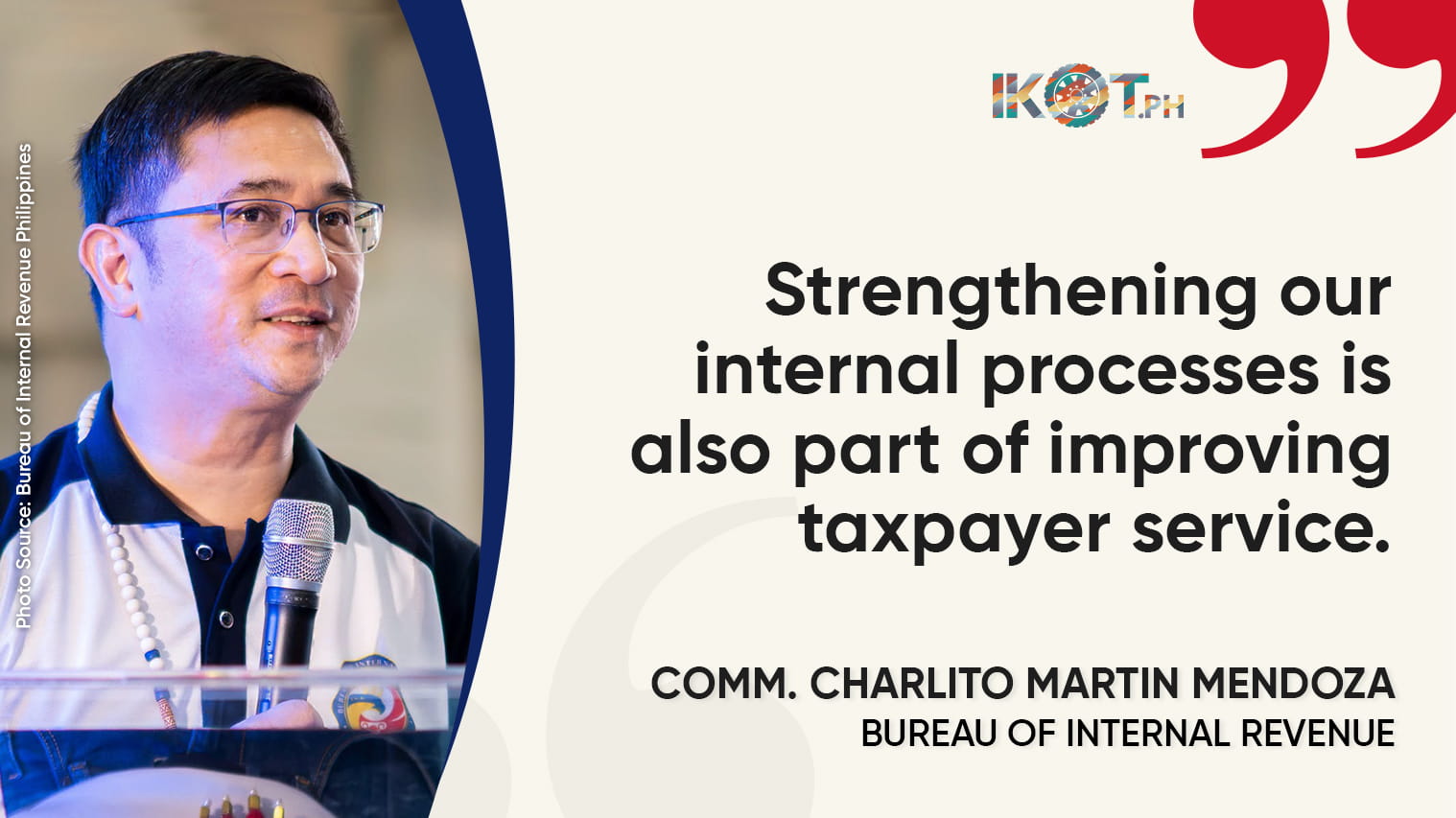
“Strengthening our internal processes is also part of improving taxpayer service,” Mendoza said.
“When our systems are more organized, traceable, and efficient, our people can act more promptly and effectively.”
“When our systems are more organized, traceable, and efficient, our people can act more promptly and effectively,” he added.
Implemented under Revenue Memorandum Order (RMO) No. 21-2026, issued on August 13, 2026, the DTMS is an online facility that enables authorized BIR users to receive, track, manage, and store official documents.
The system provides information on document status, physical location, and chain of custody, and assigns each document a system generated Document Control Number (DCN) for reference and monitoring as it moves across BIR offices.
The DTMS also incorporates access controls and data privacy safeguards, with access limited to authorized users and document handling subject to the BIR Data Privacy Manual.
“In the end, stronger internal processes should translate into faster and more responsive service for our taxpayers.”
“In the end, stronger internal processes should translate into faster and more responsive service for our taxpayers,” the BIR chief stressed.
The pilot covers the Resource Management Group, Administrative Service, Records Management Division, and the General Services Division–Communication Operations, Reproduction and Miscellaneous Services Section (GSD-CORMSS).
The DTMS complements the continued transmission of physical documents during the pilot period.
During the pilot, the system covers memoranda and letters, requests for tax case verification and/or information, active tax case dockets, requests for tax case retrieval, and confidential information.
By centrally tracking document status, location, and custody, the DTMS is intended to reduce the risk of misplaced records, improve coordination among offices, and strengthen accountability in document handling.
The pilot forms part of the BIR’s continuing effort to modernize its internal systems and make its operations more efficient and responsive, with improvements within the Bureau ultimately translating into better service for taxpayers.