
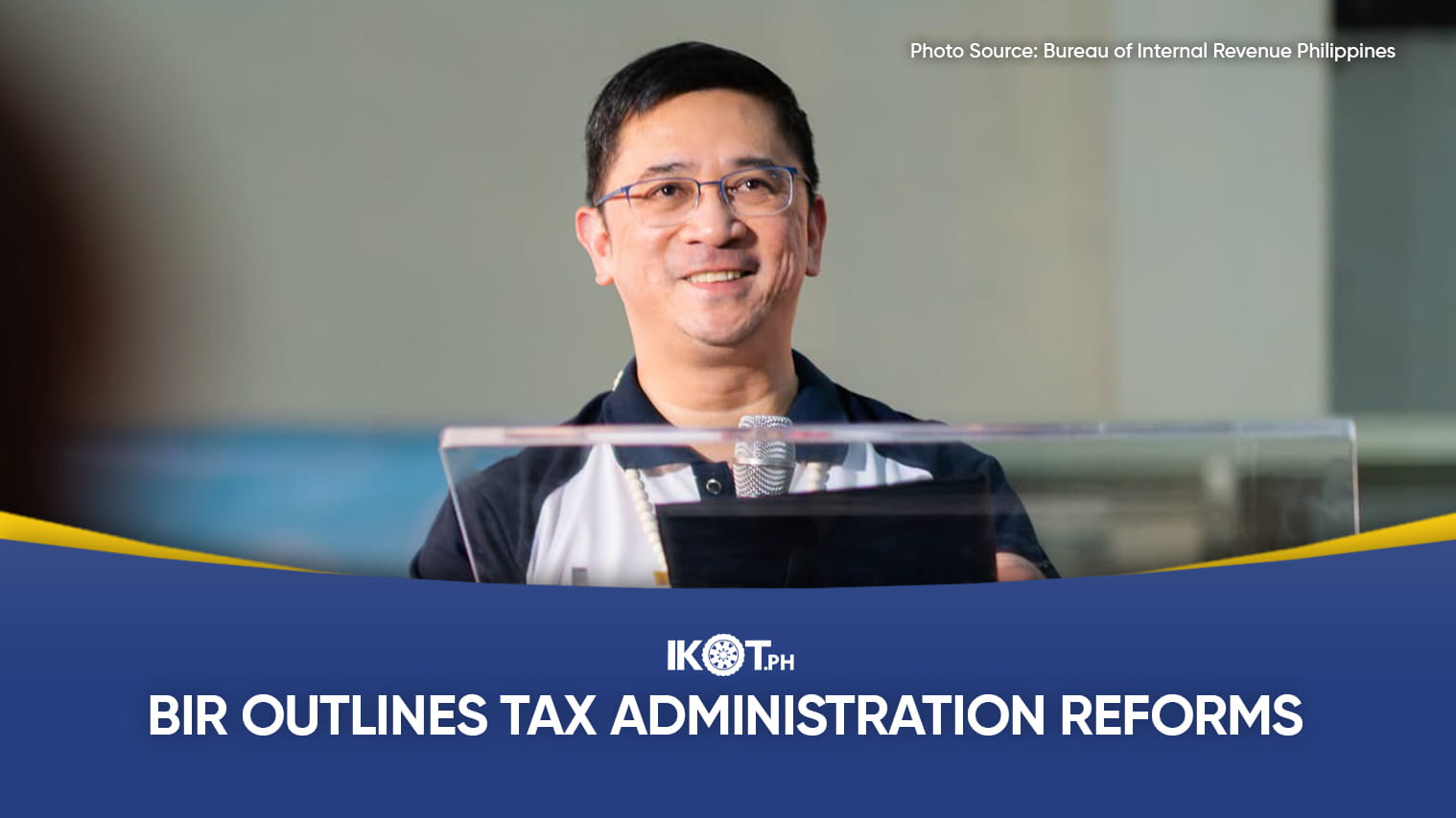
Bureau of Internal Revenue (BIR) Commissioner Charlito Martin Mendoza outlined the Bureau’s tax modernization initiatives and long-term institutional reforms under its DARES agenda at the 5th SGV Tax Symposium 2026, held in Makati City, emphasizing immediate improvements in taxpayer services alongside lasting changes in Philippine tax administration.
In his presentation titled “BIR D.A.R.E.S.: Driving Change, Delivering Impact,” Mendoza discussed the Bureau’s five reform priorities: Digital and Data Transformation; Audit Reform and Accountability; Revenue Collection and Revenue Base Protection; Employee Empowerment and Welfare Promotion; and Service Excellence and Stakeholder Engagement.
“We have made considerable progress under BIR DARES in less than a year.”
“We have made considerable progress under BIR DARES in less than a year. Our challenge now is to sustain these changes and make them part of how the BIR operates for years to come,” the BIR chief said.
The BIR’s digital modernization initiatives include the Digital TIN ID available through the eGovPH app, simplified eBIRForms for micro and small taxpayers, and the phased rollout of the Taxpayer Portal, beginning with large taxpayers. The Bureau is also moving forward with electronic invoicing and the accreditation of
Electronic Invoicing Service Providers (ESPs), which could simplify tax reporting, improve audits, and accelerate the verification and processing of tax refunds
These initiatives form part of the Bureau’s long-term vision of BIR NEXT GEN, an integrated digital ecosystem in which taxpayers and BIR personnel will have separate interfaces connected to a single, reliable source of taxpayer information. To support this transition, the BIR is cleaning up taxpayer records, addressing inconsistencies, and working toward retiring outdated legacy systems. Other modernization initiatives include developing TERRY, an AI Tax Assistant for tax research and verification, and integrating the electronic Authority to Release Imported Goods (eATRIG) into the National Single Window.
On audit reform, the BIR introduced the Single-Instance Audit, limiting audits to one Letter of Authority per taxpayer per taxable year. Procedures have also been standardized under the Consolidated Audit Program and Manual, while the Revalida, or Audit of Auditors, reinforces accountability and proper implementation across Revenue Regions.
“We cannot change the old system if we continue allowing the old practices.”
“If you encounter practices that should no longer be happening under our new rules, please report them. Please share specific details so we can investigate and take appropriate action,” Mendoza urged.
“We cannot change the old system if we continue allowing the old practices,” he added.
The Bureau is also strengthening personnel ethics and professionalism through ESACOR, an ethics course for BIR employees. Meanwhile, consultations with business chambers, professional organizations, and industry groups through the expanded BIR Partnership with Multisectoral Group (PMSG) continue to inform the implementation of audit reforms and preparations for electronic invoicing.
To sustain these initiatives, the BIR has institutionalized DARES through its Strategic Plan for 2026–2028. It is cascading its priorities to Revenue Regions, District Offices, and other units, with specific programs, responsibilities, and performance measures to make the reforms part of the Bureau’s regular operations.
The Commissioner reaffirmed the Bureau’s commitment to taxpayer service.
“Our commitment remains ‘Mahusay na Serbisyo, Katumbas ng Buwis Mo.’ As we ask taxpayers to fulfill their obligations, we must also deliver the quality of service you deserve,” Mendoza concluded.