Education Secretary Sonny Angara showcased the Philippines’ expanded school feeding initiatives at the opening of the 2nd Southeast Asia Regional School Meals Coalition Summit on Monday, emphasizing that investing in learner nutrition improves health, boosts classroom performance, and builds a stronger future for the region.
In his keynote address before regional education ministers, senior government officials, development partners, international organization representatives, and civil society leaders, Angara underscored the country’s commitment to ensuring no child is left behind due to hunger, adding that providing nutritious meals in schools remains one of the most effective long-term investments a nation can make for its youth.
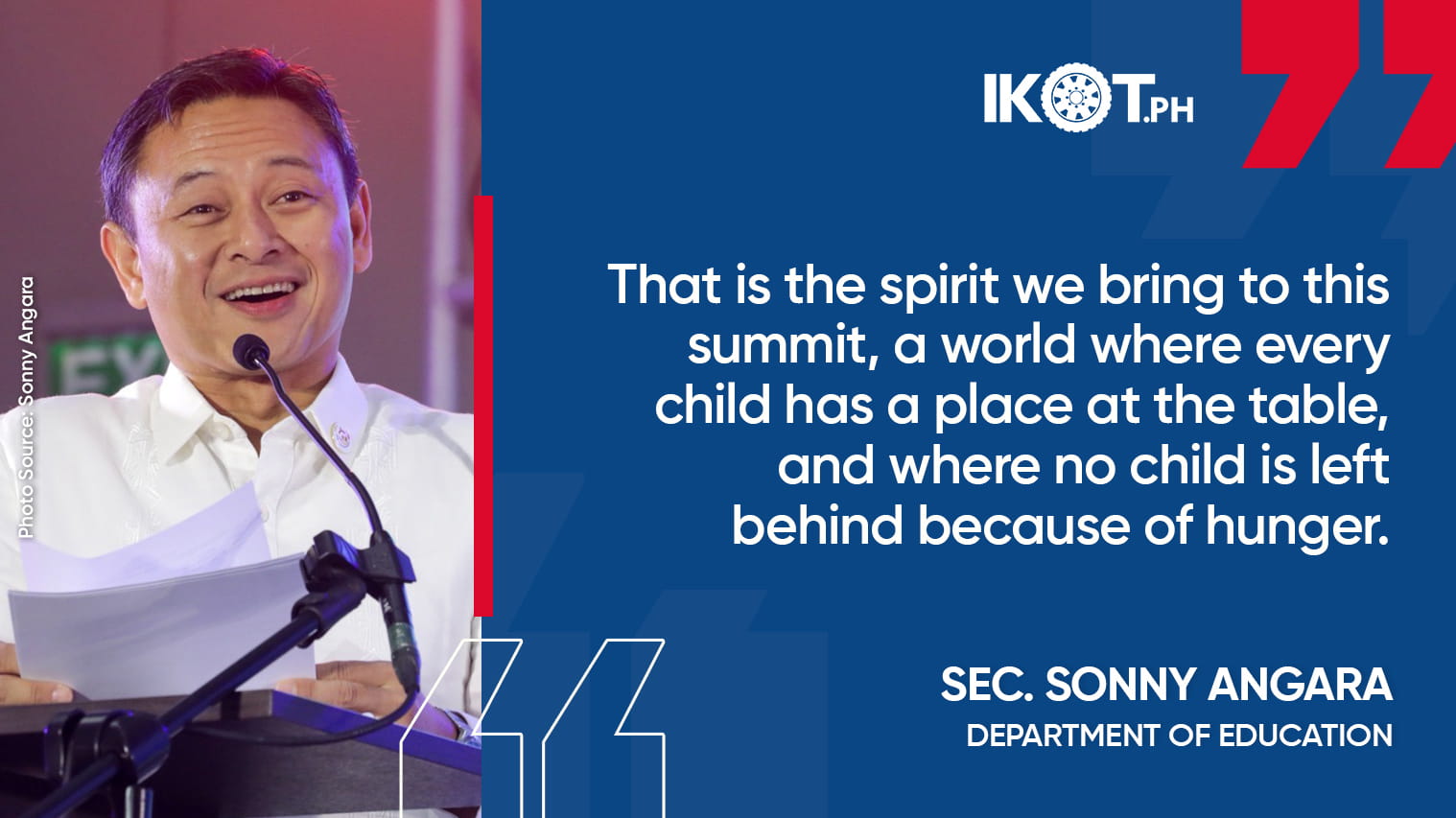
“In Filipino households, you hear ‘Kain po tayo.’ It means, ‘Let’s eat,’ But in Filipino culture, it means much more. It is an invitation to belong, to hang out, an expression of care, and our way of saying there is a place for you at our table,” Angara said. “That is the spirit we bring to this summit, a world where every child has a place at the table, and where no child is left behind because of hunger.”

Under President Ferdinand R. Marcos Jr.’s administration, the Department of Education (DepEd) has significantly scaled up its School-Based Feeding Program (SBFP). For School Year 2026–2027, DepEd secured a record PHP 25.6 billion allocation to reach 4.63 million public school learners nationwide, more than double the PHP 11.8 billion allocated in 2025 and up from PHP 3.3 billion in 2022 when President Marcos took office.
“You cannot learn on an empty stomach. When we are well-fed, we can focus better, participate in class, and get higher grades.”
DepEd has also extended feeding days from 120 to 200, ensuring sustained nourishment throughout the school year. The expansion provides universal feeding for all Kindergarten and Grade 1 pupils, as well as undernourished learners from Grades 2 to 6, adolescent mothers, and vulnerable learners beyond Grade 6.
Angara also highlighted that school meal programs also stimulate local and national economies by connecting feeding initiatives to local farmers, food producers, and suppliers.
“A meal served in a school can have an impact far beyond the child who receives it. It helps a local farmer sell produce, supports a community supplier, creates work for a cook, and brings schools and communities closer together. This model is nationally supported, locally delivered, and sustained through strong partnerships,” the Education Chief said.
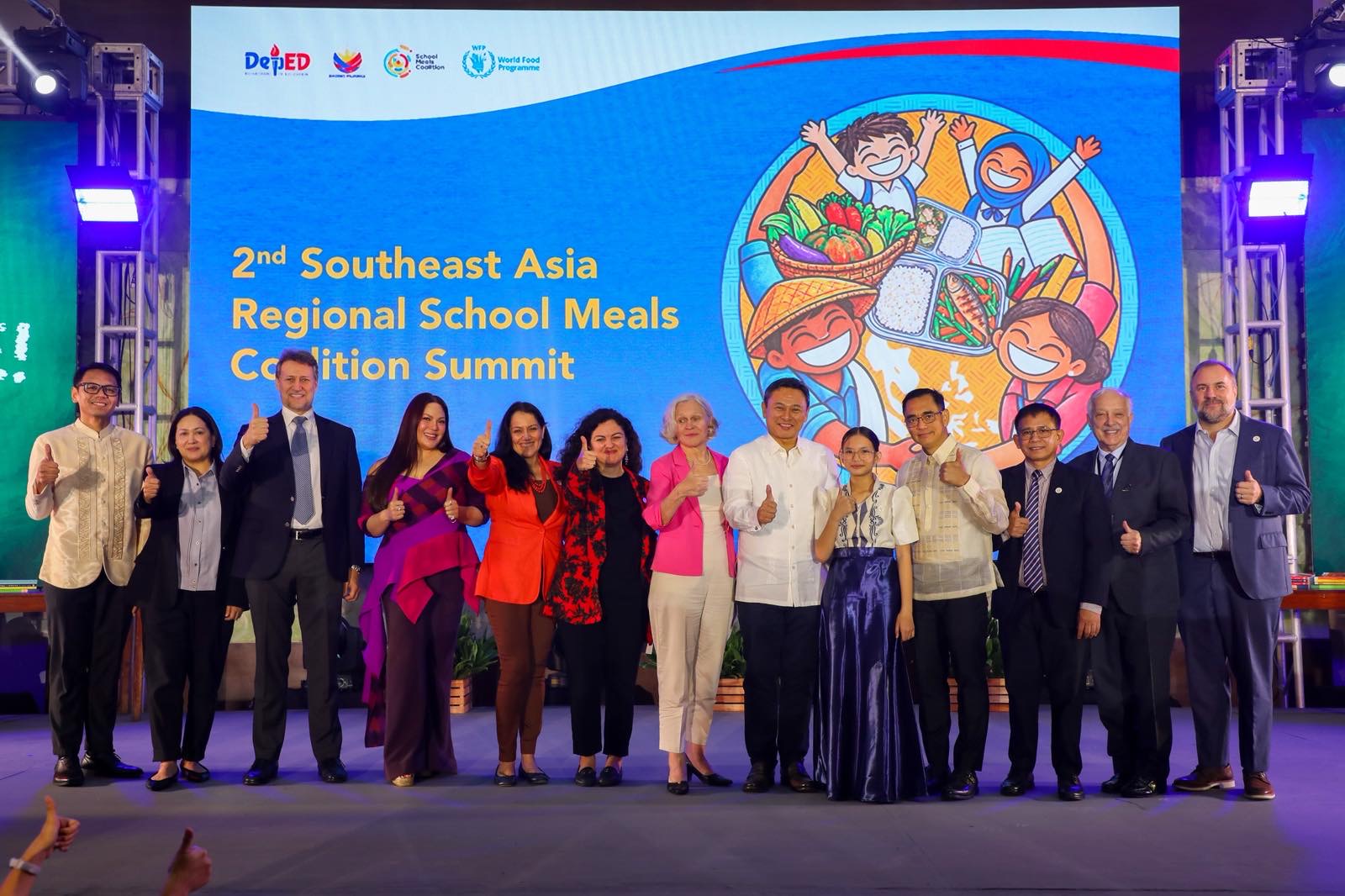
He also urged member states to build on the momentum of the inaugural 2024 Summit in Siem Reap, Cambodia, where regional leaders signed a landmark Outcome Statement establishing school meals as a priority to address child malnutrition.
“Across Southeast Asia, our countries share the exact same responsibility. We should leave Manila with more than another declaration; we should leave with a stronger regional agenda, concrete actions, and a renewed determination to reach every child. The biggest investment we can make in our future is still our children,” Angara added.
The human impact of these policy investments was brought to life at the summit by Royiella Veine Lim, a learner and leader from Mandaluyong Elementary School who benefited from the program for three years.
“Before, there were days when I came to school feeling hungry. Sometimes, it was difficult to concentrate on my lessons because my stomach was empty. To me, a healthy school meal is more than just food on a plate, it is fuel for our brains and care in a bowl,” she shared. “A healthy school meal gave me the energy to listen to my teacher, play with my classmates, and finish my schoolwork without my stomach hurting from hunger.”
Lim also emphasized how guaranteed meals motivate attendance and level the playing field for learners from all backgrounds.
“You cannot learn on an empty stomach. When we are well-fed, we can focus better, participate in class, and get higher grades. Most importantly, it helps us grow strong and healthy, giving every child, no matter how poor their family is, an equal chance to succeed,” she added.
The three-day summit, co-hosted by DepEd, the World Food Programme, and the global School Meals Coalition, brings together delegates from across the region to participate in policy discussions, exchange best practices, and conduct field visits focused on advancing sustainable financing and localized delivery models across Southeast Asia.