Education Secretary Sonny Angara urged families to take a more active role in their children’s education as findings from the Programme for International Student Assessment (PISA) 2025 highlighted the importance of family support, school attendance, learning habits, and students’ attitudes in improving educational outcomes.
Angara said learning does not happen only inside the classroom and that parents and guardians have an important role to play in keeping children engaged in school.
“Kailangan nating isama ang mga pamilya. Malaking bahagi ng kanyang pagkatuto ang simpleng pakikipag-usap sa isang bata tungkol sa kanyang araw sa paaralan, pakikinig sa kanyang mga problema, at paghikayat sa kanya na magpatuloy kapag nahihirapan,” Angara said.
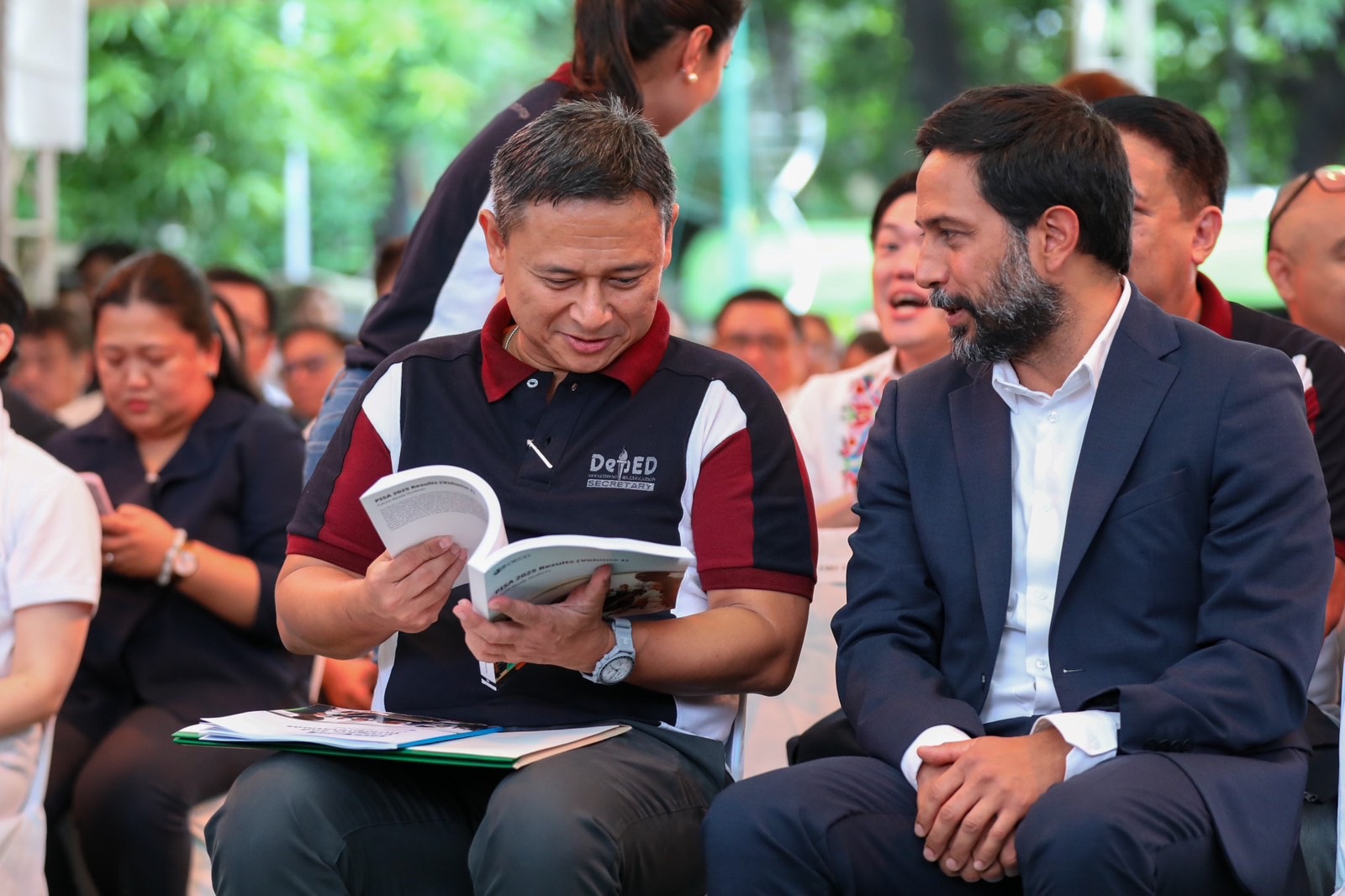
The PISA findings showed that 54 percent of Filipino learners said they discussed with their parents or guardians what they did at school at least once a week. Meanwhile, 38 percent said they talked with their parents or guardians at least weekly about problems they might be having at school.
Both figures were lower than those recorded in PISA 2022, when 57 percent of students reported weekly conversations about their school day and 45 percent reported weekly discussions about school-related problems.
“Kailangan nating isama ang mga pamilya. Malaking bahagi ng kanyang pagkatuto ang simpleng pakikipag-usap sa isang bata tungkol sa kanyang araw sa paaralan, pakikinig sa kanyang mga problema, at paghikayat sa kanya na magpatuloy kapag nahihirapan.”
The Organisation for Economic Co-operation and Development (OECD), which administers PISA, said parent engagement is associated with better science performance and more positive attitudes toward learning.
Even simple conversations, such as asking children what they did in school, can help support their learning, OECD said.
The decline in parent engagement was also observed internationally. The share of students who said their parents asked about their school day at least once a week fell from 77 percent in 2022 to 71 percent in 2025, with a particularly notable decline among boys and disadvantaged students.
For Angara, the findings reinforce the need for schools, families and communities to work together in supporting learners.
The results also showed that Filipino learners have several positive learning attitudes that schools and families can build on. Many learners said they saw the value of education, particularly its usefulness in preparing them for future work.
Angara said learning does not happen only inside the classroom and that parents and guardians have an important role to play in keeping children engaged in school.
Filipino learners also showed perseverance when schoolwork became difficult, a willingness to plan their studies, and readiness to seek help from classmates and teachers. Curiosity was another notable strength among learners.
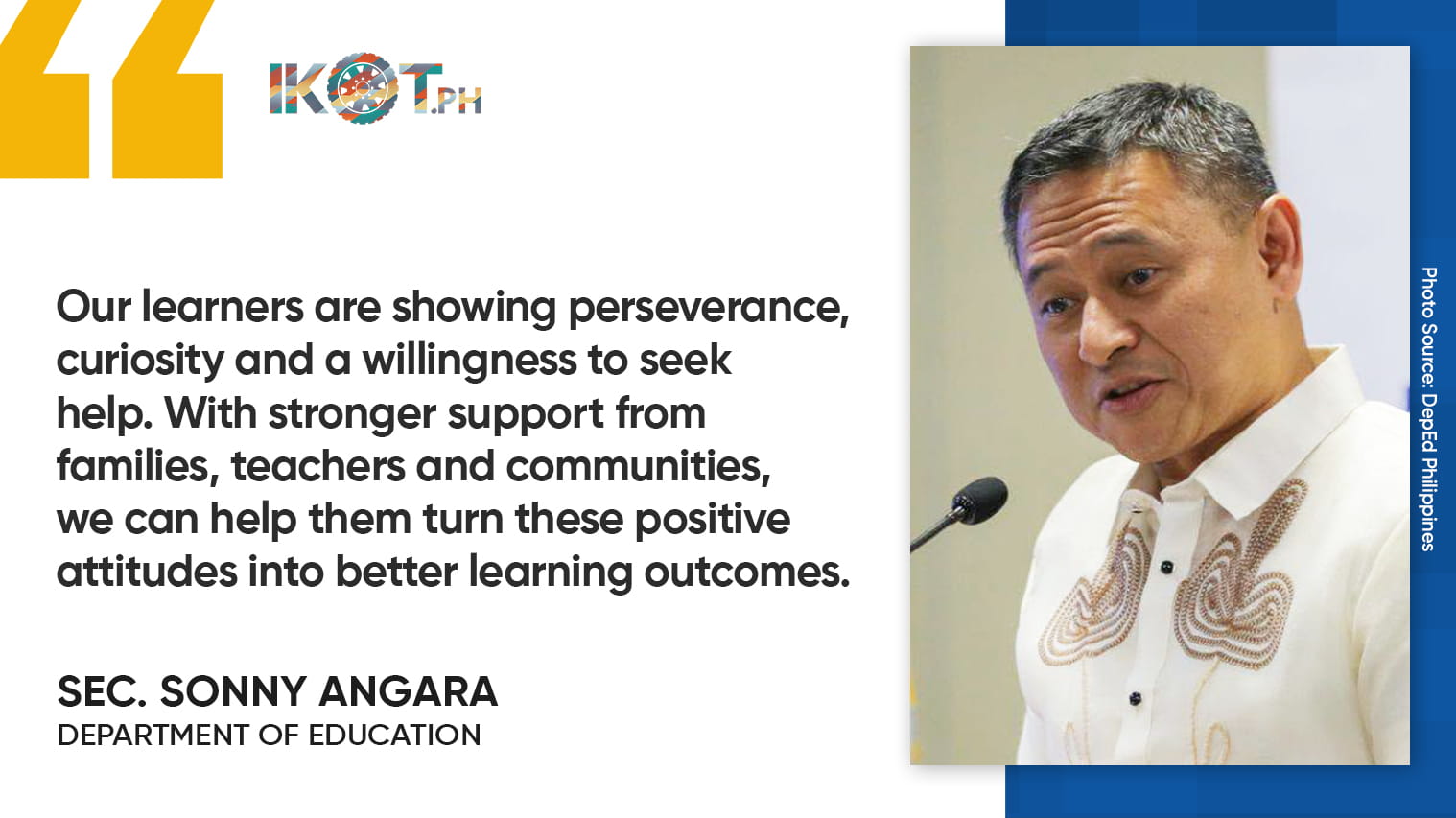
“These are strengths that we must build on. Our learners are showing perseverance, curiosity and a willingness to seek help. With stronger support from families, teachers and communities, we can help them turn these positive attitudes into better learning outcomes,” Angara said.
The Education Chief emphasized that improving education requires more than classroom instruction alone. Regular attendance, supportive school environments, positive learning habits and stronger family engagement all contribute to helping learners succeed.
Angara said it will continue working with teachers, parents, communities and other education stakeholders to translate the lessons from PISA into concrete actions that can improve learning in Philippine schools.