“Our goal is not just counting women in politics. It is making women count in politics.”
This was the message of 2026 ASEAN Inter-Parliamentary Assembly (AIPA) Organizing Committee Chairperson and House Deputy Speaker Maria Rachel Arenas as she called on Southeast Asian parliaments to ensure that women lawmakers have a greater say in shaping legislation, national budgets, foreign policy, and decisions on peace and security.
In her closing remarks at the 3rd Women Parliamentarians of AIPA (WAIPA) Women Political Leaders Forum held at the Makati Shangri-La Manila, the Deputy Speaker stressed that women’s representation must translate into meaningful participation in parliamentary leadership and decision-making.
“A seat is not always the same as having a say.”
“If there is one thought I will take away from today’s discussions, it is this: a seat is not always the same as having a say,” Arenas said.
“Women may be present in parliament, yet still not represented in committees and leadership positions that make the most consequential decisions,” the seasoned lawmaker added.
The veteran legislator warned that limiting women lawmakers to matters traditionally considered women’s issues deprives parliaments of important perspectives on policies that affect entire communities. She also highlighted the need to protect women political leaders from harassment, disinformation, and abuse, particularly online.
As the forum concluded, Arenas proposed three commitments for ASEAN parliaments: expand women’s access to leadership positions and influential committees; make political participation safer both online and offline; and translate commitments into measurable results through legislation, budget allocations, and parliamentary oversight.
“No woman should have to choose between her voice and her safety.”
“No woman should have to choose between her voice and her safety,” she declared.
Linking these commitments to the Philippine AIPA Presidency’s theme, “Parliaments Securing a Peaceful, Prosperous, and People-Centred ASEAN,” Arenas emphasized that regional progress requires women to participate fully in decisions affecting their countries and communities.
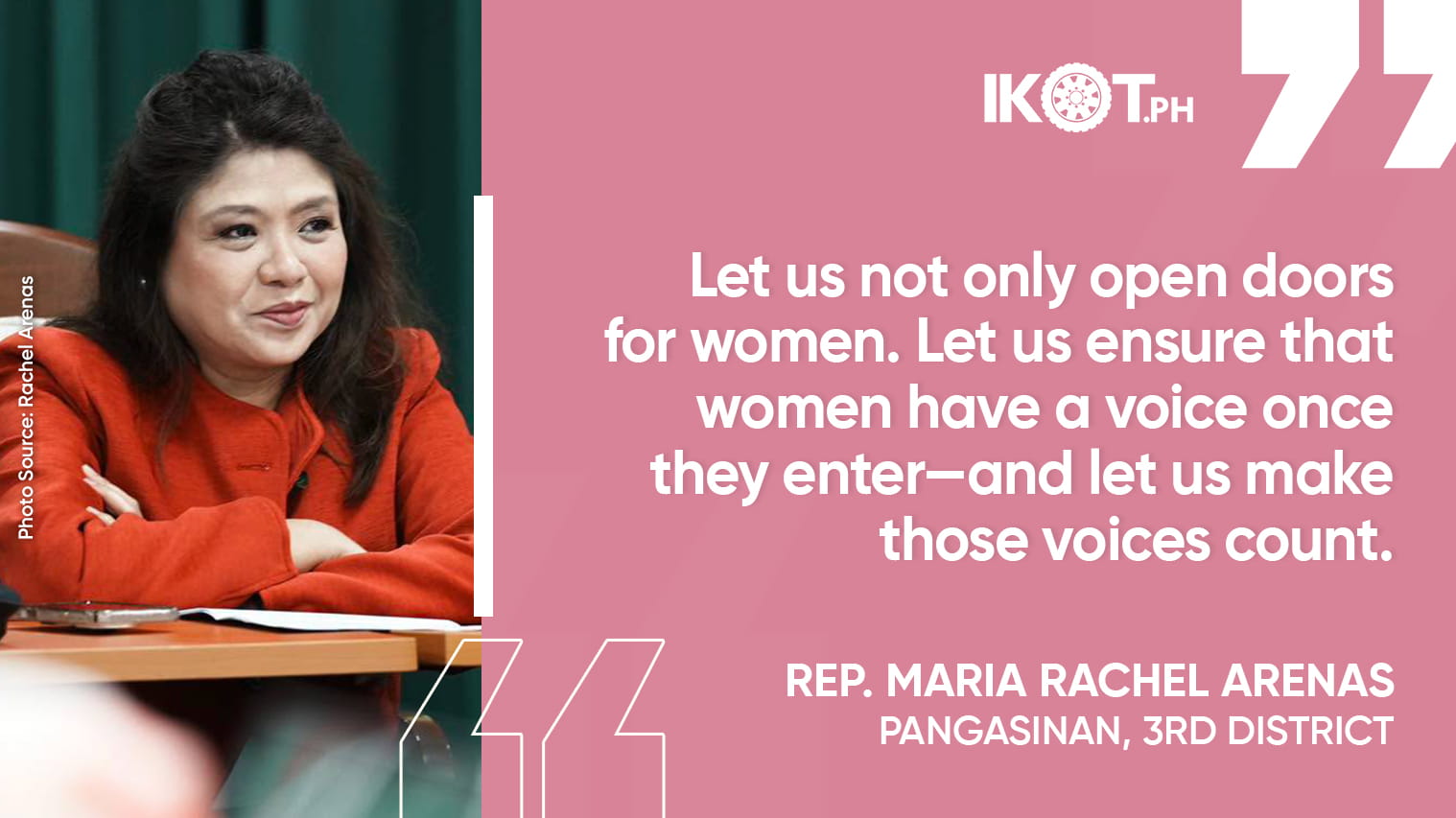
“Let us not only open doors for women. Let us ensure that women have a voice once they enter—and let us make those voices count,” she concluded.