
Bureau of Internal Revenue (BIR) Commissioner Charlito Martin Mendoza reported on the first six months of the Bureau’s reforms under the BIR DARES agenda during the Swiss Chamber of Commerce of the Philippines (SwissCham) “Policy to Practice” Roundtable.
During the event, the BIR and SwissCham also signed a Memorandum of Understanding (MOU) to strengthen public-private collaboration on tax administration, digital transformation, and taxpayer service.
Addressing members of SwissCham, representatives of the Swiss Embassy, and other stakeholders, Mendoza presented the Bureau’s reform agenda since its launch in January 2026, organizing the discussion around three outcomes experienced by taxpayers and businesses: a more predictable tax administration; easier compliance and better taxpayer service; and broader economic and social impact.
Reflecting on the theme of the forum, “Policy to Practice,” the Commissioner emphasized that successful reforms begin long before a policy is issued, and the quality of implementation often depends on the quality of the consultation that preceded it.
“Reforms tend to work better when the people affected by them help shape them.”
“Taxpayers are more likely to understand, support, and comply with a reform when they know their concerns were heard and considered during its development. One lesson from the first six months of BIR DARES is that reforms tend to work better when the people affected by them help shape them,” he said.
Mendoza noted that BIR DARES continues to serve as the Bureau’s five-point reform framework covering Digital and Data Transformation; Audit Reform and Accountability; Revenue Collection and Revenue Base Protection; Employee Empowerment and Welfare Promotion; and Service Excellence and Stakeholder Engagement.
He reported that one of the Bureau’s earliest priorities was improving predictability in tax administration, particularly in conducting tax audits.
“While enterprises can adapt to most requirements, what is more difficult to manage is uncertainty,” Mendoza said, referring to a recurring theme in his dialogues with various stakeholder groups.
In January, the Bureau implemented a package of audit reforms that included the one Letter-of-Authority-per-taxpayer-per-taxable-year policy, the launch of the LOA Verifier, stronger accountability mechanisms, and clearer procedures and safeguards for tax audits.
“Those who deliberately evade their obligations should expect the Bureau to act.”
“Audit and assessment should be about fairness, not fear. Compliant taxpayers should not feel that they are being treated as adversaries. At the same time, those who deliberately evade their obligations should expect the Bureau to act,” he said.
While making tax administration more predictable, the Bureau continued to pursue enforcement actions against illicit trade and tax evasion through targeted operations and criminal case filings.
The event concluded with the signing of a Memorandum of Understanding between the BIR and SwissCham establishing a general framework of cooperation to strengthen engagement and facilitate collaboration on tax policy and administration through regular dialogue, knowledge sharing, technical exchanges, assistance in the development and enhancement of BIR systems, and discussions on revenue and tax-related developments.
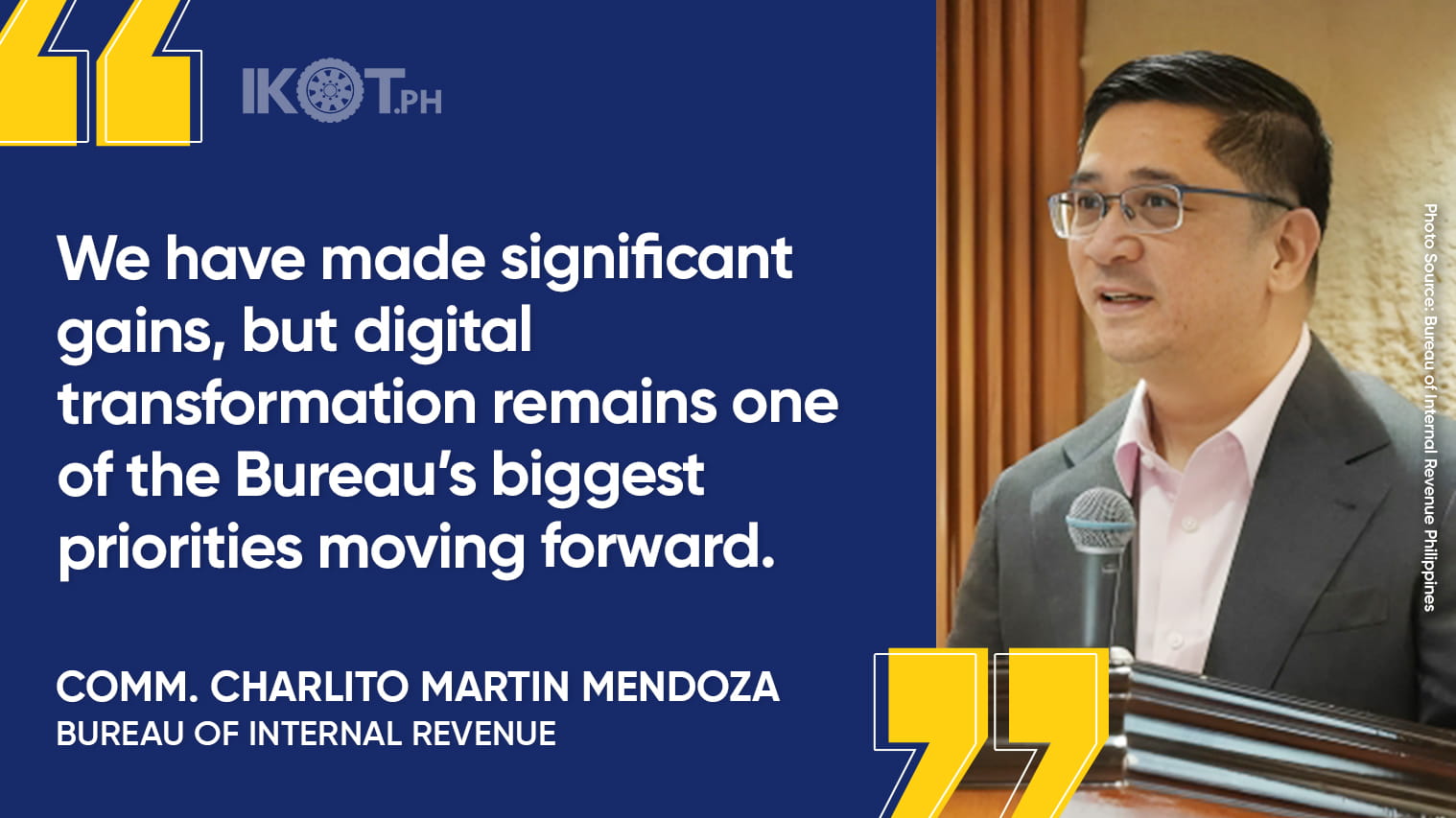
“We have made significant gains, but digital transformation remains one of the Bureau’s biggest priorities moving forward. Through the Memorandum of Understanding we sign, we hope to sustain that cooperation through regular dialogue, knowledge sharing, and collaboration,” Mendoza concluded.