
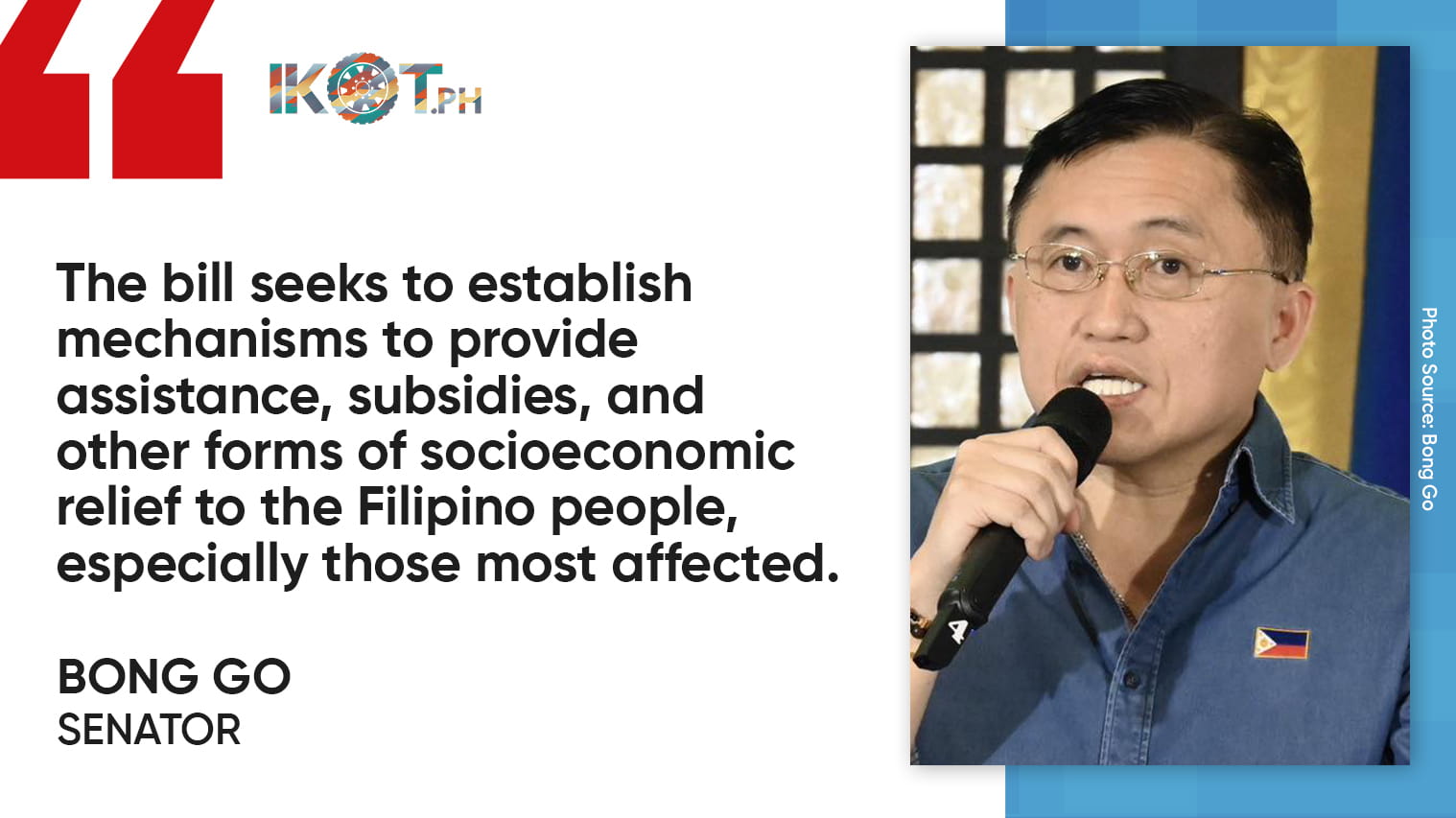
Senator Bong Go filed a proposed measure seeking urgent relief interventions to cushion Filipinos from the impact of surging fuel prices, including the temporary deferment of the payment contributions to key government agencies such as the Philippine Health Insurance Corporation (PhilHealth), the Social Security System (SSS), the Government Service Insurance System (GSIS), and the Home Development Mutual Fund (Pag-IBIG Fund).
The proposed “Fuel Crisis Immediate Relief and Response Act” outlines a set of economic safeguards designed to ease financial pressure on households and vulnerable sectors affected by global oil market disruptions.
In his explanatory note, Go cited escalating tensions in West Asia, particularly involving major oil-producing nations and key oil transit routes, as a primary driver of global fuel price instability.
The veteran legislator noted that “conflicts in the region, especially involving Iran, Israel, and key oil transit routes such as the Strait of Hormuz, have led to interruptions in oil supply, causing unstable markets and driving global fuel prices upward.”
The seasoned lawmaker further pointed out that “recent data indicates that global crude prices have surged past $115 per barrel,” emphasizing that as a net oil-importing country, the Philippines remains highly vulnerable to such external shocks.
According to the explanatory note, these developments have led to “increased transportation costs, higher prices of basic goods, and diminished purchasing power among Filipino households,” with low- and middle-income families among the most affected.
To address these challenges, the bill proposes several immediate relief measures.
Among them is the deferment of contributions for two months to PhilHealth under Republic Act No. 11223 or the Universal Health Care Act; Pag-IBIG under Republic Act No. 9679; GSIS under Republic Act No. 8291; and SSS under Republic Act No. 11199. These deferred payments would be settled on a staggered basis over three monthly installments.
“Provide a 30-day grace period for the payment of all existing and outstanding loans from GSIS, SSS, Pag-IBIG, and other government lending institutions.”
The measure also mandates a 30-day grace period for the payment of all existing and outstanding loans from GSIS, SSS, Pag-IBIG, and other government lending institutions, without incurring interest, penalties, or other charges.
The bill directs the Department of Trade and Industry (DTI) to strictly enforce laws against hoarding, profiteering, price manipulation, and other practices that distort the supply and distribution of essential goods and services.
“Implement a Libreng Sakay Program to provide free rides in priority routes.”
It also provides targeted assistance to sectors heavily affected by rising fuel costs, including fuel subsidies and discounts for public utility drivers and operators, agricultural workers, and essential transport personnel, as well as the implementation of a Libreng Sakay Program to provide free rides in priority routes.
To support economic activity, the measure expands access to credit for micro, small, and medium enterprises (MSMEs), cooperatives, and agricultural workers, while also providing loan interest rate subsidies for critically impacted businesses. Reintegration support for repatriated overseas Filipino workers (OFWs), including livelihood and employment assistance, is likewise included.
In addition, the bill authorizes the implementation of temporary price control measures on basic necessities including medicines and residential rents during periods of significant fuel price increases or national energy emergencies.
The measure also mandates a minimum 30-day grace period for utility payments of residential and small business accounts, including electricity, water, and telecommunications services, without penalties or additional charges. Unpaid bills may be settled on a staggered basis, subject to regulatory guidelines.
The explanatory note emphasized that the measure seeks “to establish mechanisms to provide assistance, subsidies, and other forms of socioeconomic relief to the Filipino people, especially those most affected,” in response to the ongoing global energy crisis.