
Senator Bong Go welcomed the enactment of Republic Act No. 12321, or the Last Mile and GIDA Schools Act, saying children living in remote and disadvantaged communities should no longer have to endure hours-long journeys or study in poorly equipped schools simply because of where they were born.
Go, chairperson of the Senate Committee on Youth, and a co-author and co-sponsor of the measure in the Senate, had pushed for stronger government intervention for public schools in Geographically Isolated and Disadvantaged Areas or GIDAs.
“Responsibilidad natin na ilapit ang serbisyo, lalo na ang edukasyon, sa mga komunidad na matagal nang napag-iiwanan.”
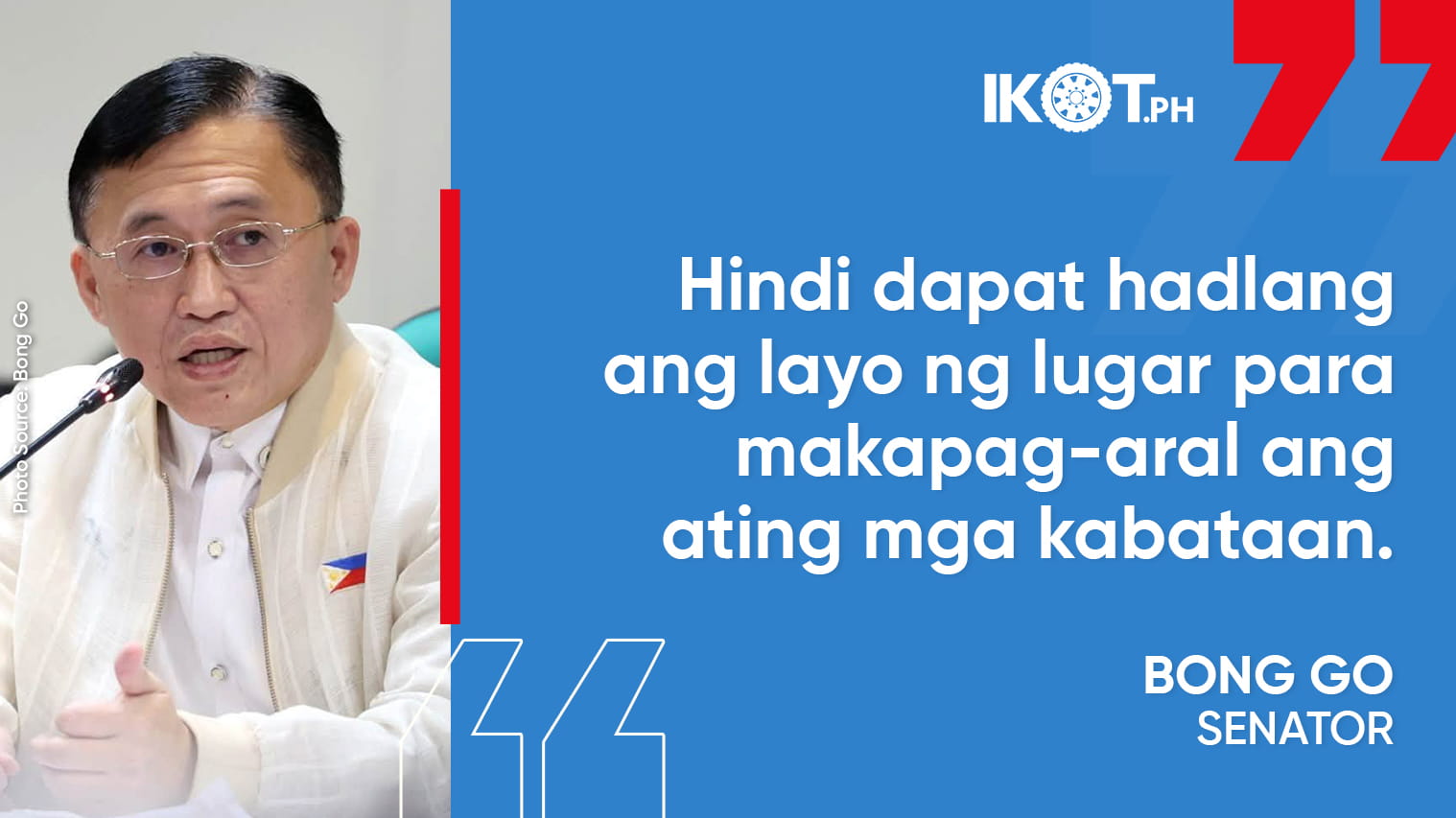
“Hindi dapat hadlang ang layo ng lugar para makapag-aral ang ating mga kabataan. Responsibilidad natin na ilapit ang serbisyo, lalo na ang edukasyon, sa mga komunidad na matagal nang napag-iiwanan,” the veteran legislator said when the Senate approved the measure earlier this year.
Republic Act No. 12321 was enacted on July 22, institutionalizing a national program for public basic education schools in remote, hard-to-reach, underserved, economically disadvantaged and conflict-affected communities.
The seasoned lawmaker said he has personally seen the difficulties faced by students in far-flung communities, particularly in Mindanao.
“Ako rin po ay mula sa isang probinsya, from Davao Region. Ang aking mga kamag-anak ay mula sa malayong lugar sa Davao Oriental. At saksi ako roon sa sobrang layo—dalawang oras ang nilalakad ng mga estudyante,” he told the Senate when the measure was deliberated.
The senator noted that many last-mile schools continue to lack electricity, adequate classrooms, connectivity and other basic facilities.
“Hindi dapat maging hadlang ang lokasyon ng isang paaralan upang makamit ng ating mga kabataan ang dekalidad na edukasyon.”
“Hindi dapat maging hadlang ang lokasyon ng isang paaralan upang makamit ng ating mga kabataan ang dekalidad na edukasyon,” he stressed.
Under the new law, the Department of Education must adopt a national school accessibility standard. As a general rule, learners should have access to a basic education school within a walkable distance of three kilometers from their residence.
Where geography, terrain or safety makes such access impractical, DepEd and local governments are mandated to provide alternative learning arrangements and transportation support.
The law also directs government agencies to address the wider infrastructure problems surrounding remote schools.
The Department of Public Works and Highways will be involved in building and maintaining access roads, while concerned agencies are tasked with expanding electricity, internet connectivity, safe water and transportation services to communities served by GIDA schools.
Within one year, DepEd must also develop and publish a National Last Mile and GIDA Schools Map to identify underserved schools and communities and guide future funding and government interventions.
Go emphasized that improving access cannot stop with constructing classrooms.
RA 12321 provides for learning materials and equipment, health and nutrition interventions, water and sanitation facilities, connectivity, alternative learning modalities, and additional support for teachers and non-teaching personnel assigned to difficult areas.
Qualified personnel may receive special hardship and mobility assistance, transportation support and, where appropriate, housing or accommodation assistance. The law also promotes scholarships and teacher-training programs aimed at developing educators from GIDA and indigenous communities themselves.
The measure likewise recognizes the particular needs and rights of Indigenous Peoples, including the incorporation of Indigenous Knowledge Systems and Practices, indigenous languages and community-validated cultural narratives in appropriate school programs.
The Senate approved the GIDA Schools bill on third reading with 20 affirmative votes and no opposition or abstention, with Go voting in favor.
He said the law complements his broader advocacy of expanding educational opportunities regardless of a student’s economic circumstances or location.
Go has also pushed for expanded tertiary education subsidies and supported measures such as the No Permit, No Exam Prohibition Act, Free College Entrance Examinations Act, Alternative Learning System Act and Basic Education Mental Health and Well-Being Promotion Act.
He stressed that a child growing up in a mountain community, indigenous village, distant island or conflict-affected area deserves the same opportunity to learn as someone living near the center of a major city.
“Lahat ng mag-aaral at guro sa ating mga pampublikong paaralan ay nararapat lamang na magkaroon ng ligtas, maayos, at komportableng silid-aralan,” Go said.
He urged DepEd and other implementing agencies to ensure that the promise of RA 12321 translates into visible improvements on the ground, particularly in communities that have waited years for adequate roads, classrooms, teachers, electricity and connectivity.