Senator Bong Go is pushing for stronger consumer protection in internet and telecommunications services through two proposed measures seeking to address unused mobile and internet data, as well as service outages and disruptions affecting subscribers.
Go’s initiatives include Senate Bill No. 2241, or the Roll-Over Internet Data Bill, and Senate Bill No. 2245, or the Automatic Refund for Internet and Telecommunications Services Outages and Disruptions Bill.
SBN 2241 seeks to mandate and institutionalize a roll-over data allocation scheme for all Internet Service Providers (ISPs) in the Philippines.
Under the measure, unused data would be carried over until fully consumed or converted into rebates, allowing subscribers to receive the fair value of services they have already paid for.
The veteran legislator emphasized that internet access has become part of daily life for Filipinos, particularly students, workers, small business owners, and families who rely on connectivity for education, livelihood, communication, and emergency needs.
“Kung hindi nagamit, dapat hindi basta mawawala.”
“Binabayaran po ng tao ang data nila. Kung hindi nagamit, dapat hindi basta mawawala. Dapat may proteksyon ang consumers at dapat patas ang serbisyo,” the seasoned lawmaker said.
The senator cited the World Bank’s 2024 “Better Internet for All Filipinos” report, which stated that the Philippines continues to lag behind its Southeast Asian neighbors, with fixed broadband prices among the highest in the region. The measure also noted that current industry practices allow ISPs to automatically forfeit unused data once a subscription period ends, leaving consumers exposed to rigid expiration policies despite varying usage patterns.
Under the bill, all ISPs in the country would be covered by the proposed law. For postpaid subscribers, rolled-over data would be prioritized for consumption in the succeeding month, while unused data every month would be accumulated until the last month of the year. Any unused data allocation for the year may be converted into rebates that subscribers may use as payment for internet service in the succeeding year of subscription.
For prepaid subscribers and postpaid users who avail of promo offers, unused data would be rolled over if the subscriber renews the subscription immediately after the offer duration lapses. If the subscriber fails to renew, the unused data allocation would be reduced by 20 percent every day until the subscription is renewed. After five days without renewal, all unused data would be considered consumed.
Subscribers who avail themselves of unlimited internet data packages with no data cap would be exempted from the proposed law.
ISPs that fail to comply may face a fine of P50,000 per violation per subscriber, while repeated violations may lead to revocation or cancellation of the ISP’s license, registration, or franchise, as well as the waiver of pre-termination fees of affected subscribers.
The bill also provides that the Department of Information and Communications Technology (DICT), in coordination with the National Telecommunications Commission (NTC) and other concerned agencies, shall issue the implementing rules and regulations within 60 days from the effectivity of the proposed law.
“Kapag may binayaran ang Pilipino, dapat may katumbas na serbisyo.”
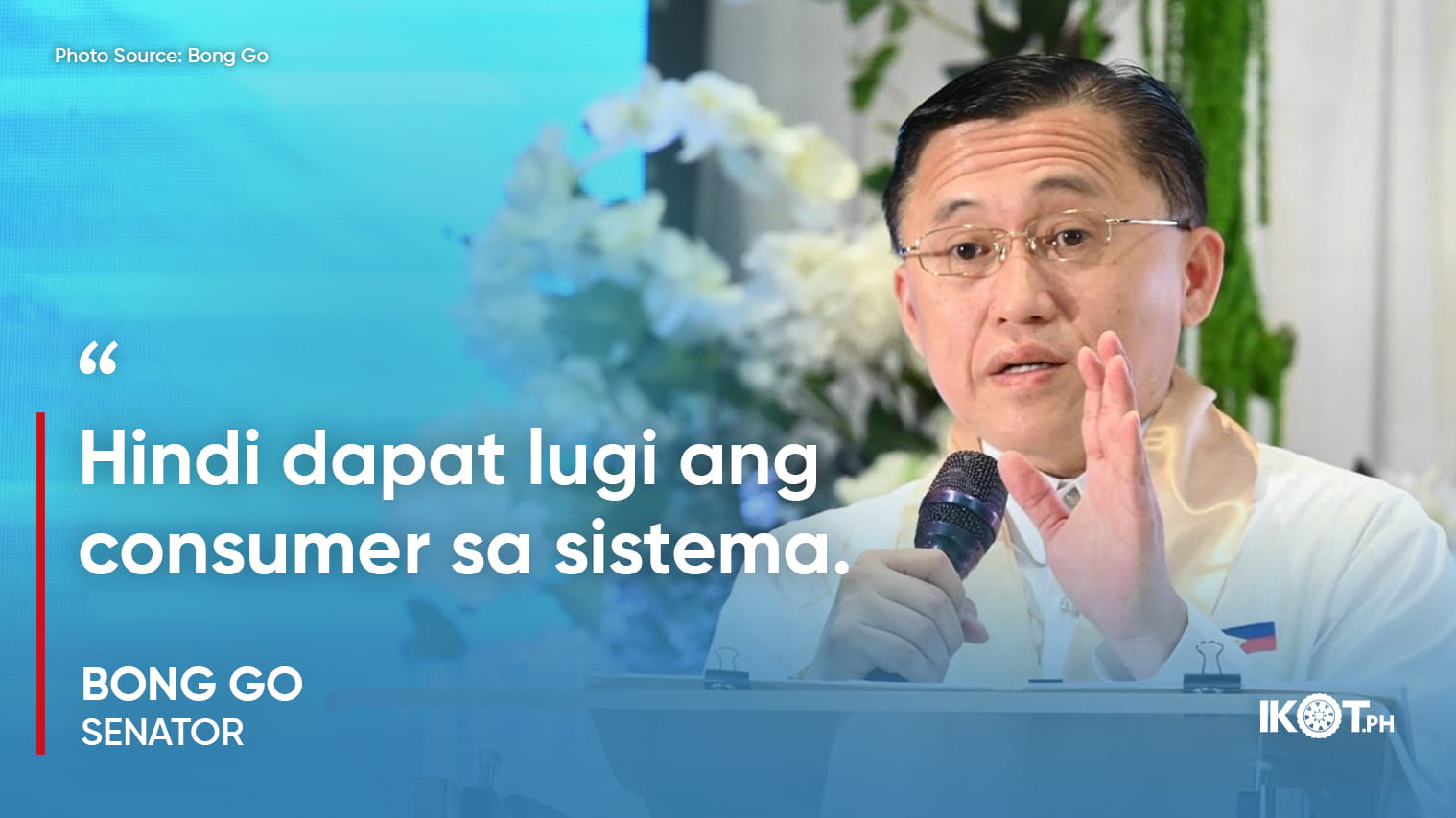
“Dapat malinaw ang rules. Kapag may binayaran ang Pilipino, dapat may katumbas na serbisyo. Hindi dapat lugi ang consumer sa sistema,” Go stressed.
He is also seeking consumer relief through Senate Bill No. 2245, or the proposed Automatic Refund for Internet and Telecommunications Services Outages and Disruptions Act. The measure mandates automatic refunds for internet and telecommunications service outages and disruptions.
Together, the two measures address recurring concerns of consumers who pay for connectivity but lose value because of unused data, interrupted service, or disrupted telecommunications access.
The proposals focus on fairness, transparency, and accountability in basic digital services that many Filipinos now depend on for work, school, business, and access to public information.
“Sa panahon ngayon, kailangan ng internet sa pag-aaral, trabaho, negosyo, at komunikasyon. Kaya dapat protektado ang karapatan ng ordinaryong Pilipino bilang consumer,” Go said.
He said that consumer protection in digital services must keep pace with the realities faced by Filipinos who often shoulder high connectivity costs while dealing with inconsistent service quality, limited choices, and strict subscription terms.
“Ang importante po rito, kung ano ang binayaran ng tao, dapat mapakinabangan niya. Serbisyo po dapat ang inuuna, lalo na kung basic need na ang internet sa araw-araw,” Go concluded.