Senator Bong Go personally visited vendors and members of the Muslim community in Lupon, Davao Oriental, emphasizing that government services should reach every Filipino fairly, regardless of livelihood, background, or faith.
Joined by Board Member Don Montojo, Lupon Vice Mayor Atty. Chrence Go, and Mati City Councilors Alexander Alcantara and Jimboy Dayanghirang, Go distributed various forms of assistance to 500 beneficiaries.
In his message, the veteran legislator recognized the important role of the Muslim community and reaffirmed his commitment to serving all Filipinos to the best of his ability, stressing that no sector should be left behind in accessing government programs and services.
During the visit, the seasoned lawmaker expressed support for local products and small vendors.
While in Lupon, the senator saw a local vendor selling puto, kutsinta, and biko. He bought the products to support the vendor and also distributed assistance to residents he met in the area.
“Sa simpleng pagbili ng kanilang produkto, nakakatulong po tayo sa kanilang pang-araw-araw na hanapbuhay.”
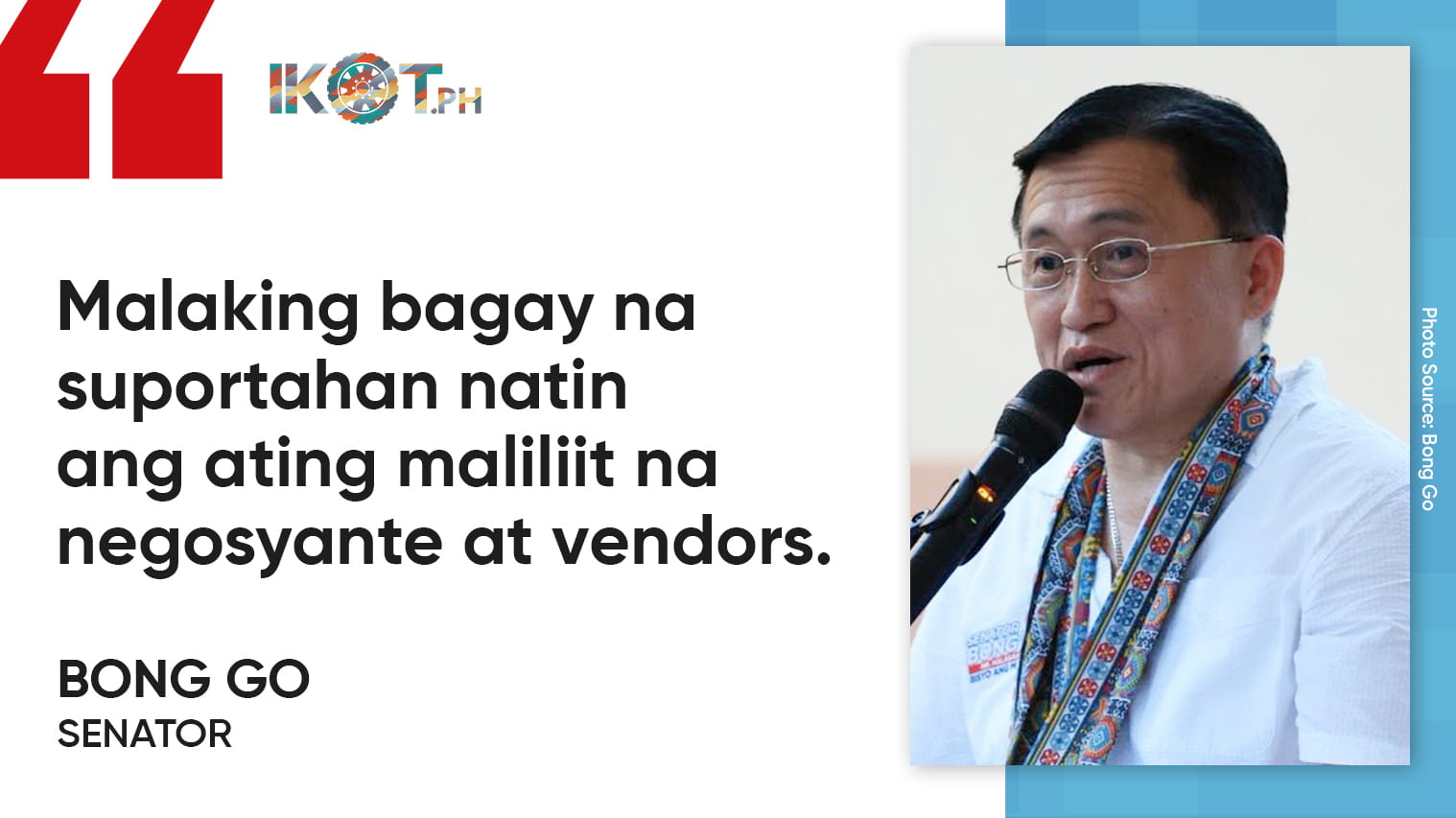
“Malaking bagay na suportahan natin ang ating maliliit na negosyante at vendors. Sa simpleng pagbili ng kanilang produkto, nakakatulong po tayo sa kanilang pang-araw-araw na hanapbuhay,” Go explained.
He also gave a crutch to a person with disability as a simple form of assistance to help with mobility.
The activity also highlighted his continuing support for Muslim Filipinos, Indigenous Peoples, and other communities that need better access to basic services and government assistance.
Go co-sponsored Senate Bill No. 1273, or the Equal Access to Public Cemeteries Bill, which seeks to provide culturally appropriate burial grounds for Muslim Filipinos, Indigenous Peoples, and other denominations.
He also pushed for increased funding for the National Commission on Muslim Filipinos to support programs such as Hajj assistance, scholarships, healthcare initiatives, and community development.
As Vice Chairperson of the Senate Committee on Health and Demography, Go has continued to push measures aimed at improving access to healthcare, especially for poor Filipinos and those in need. These include Malasakit Centers, Super Health Centers, public hospital upgrades, regional specialty centers, and expanded PhilHealth benefits.
There are now 167 Malasakit Centers in the country. In Davao Region, six Malasakit Centers are operating, including one in Davao Oriental at the Davao Oriental Provincial Medical Center in Mati City.
Malasakit Centers serve as one-stop shops where patients may seek medical and financial assistance from concerned agencies without having to move from one office to another outside the hospital. Under Republic Act No. 11463, or the Malasakit Centers Act, these centers are established in Department of Health hospitals and other qualified public hospitals to help indigent and financially incapacitated patients access available assistance.
“The Malasakit Center program has already provided aid to more than 17 million Filipinos.”
The DOH reports that the Malasakit Center program has already provided aid to more than 17 million Filipinos.
In Davao Oriental, Go also cited the continued expansion of Super Health Centers. These include the Lupon Super Health Center, which has been completed, as well as facilities in Mati City, Manay, Cateel, Calapagan in Lupon, Dahican in Mati City, Baganga, Boston, Caraga, San Isidro, and Tarragona.
Super Health Centers are designed to bring primary care and basic medical services closer to communities. These facilities can help ease the burden on hospitals by making early consultation, outpatient care, and basic health services more accessible to residents.
He also pointed to regional specialty centers in Davao Region. At the Southern Philippines Medical Center in Davao City, existing specialty services include cardiovascular care, lung care, neonatal care, trauma care, toxicology, cancer care, eye care, and dermatology care.
Planned services include renal care and transplant, brain and spine care, orthopedic care, physical rehabilitation medicine, mental health, burn care, infectious disease and tropical medicine, and geriatric care.
At the Davao Regional Medical Center in Tagum City, existing specialty service includes orthopedic care, while planned services include renal care and transplant, brain and spine care, cancer care, geriatric care, and eye care.
His visit to Lupon combined direct aid, support for local livelihood, assistance to a PWD, engagement with Muslim residents, and a discussion of legislative measures on health, public services, and community welfare.
For Go, service must be brought directly to the people, especially those who need it most.
“Patuloy kaming magseserbisyo sa inyo dahil bisyo ko ang magserbisyo at ako ay naniniwala na ang serbisyo sa tao ay serbisyo ‘yan sa Panginoon, serbisyo ‘yan kay Allah,” he said.
On the same day, Go also visited San Isidro and Banaybanay, and assisted various sectors. He also joined the inauguration of the Super Health Center in Maco, Davao de Oro.