
A stronger rice harvest is expected in the current dry season, while agriculture officials are also expressing optimism that higher farmgate palay prices will translate into improved planting intentions for the next cropping cycle.
Agriculture Secretary Francisco Tiu Laurel, Jr. said the recent recovery in palay prices is restoring confidence among farmers after a period of weak returns that had discouraged production decisions.
“We hope this continues so farmers are encouraged to plant more for the next season.”
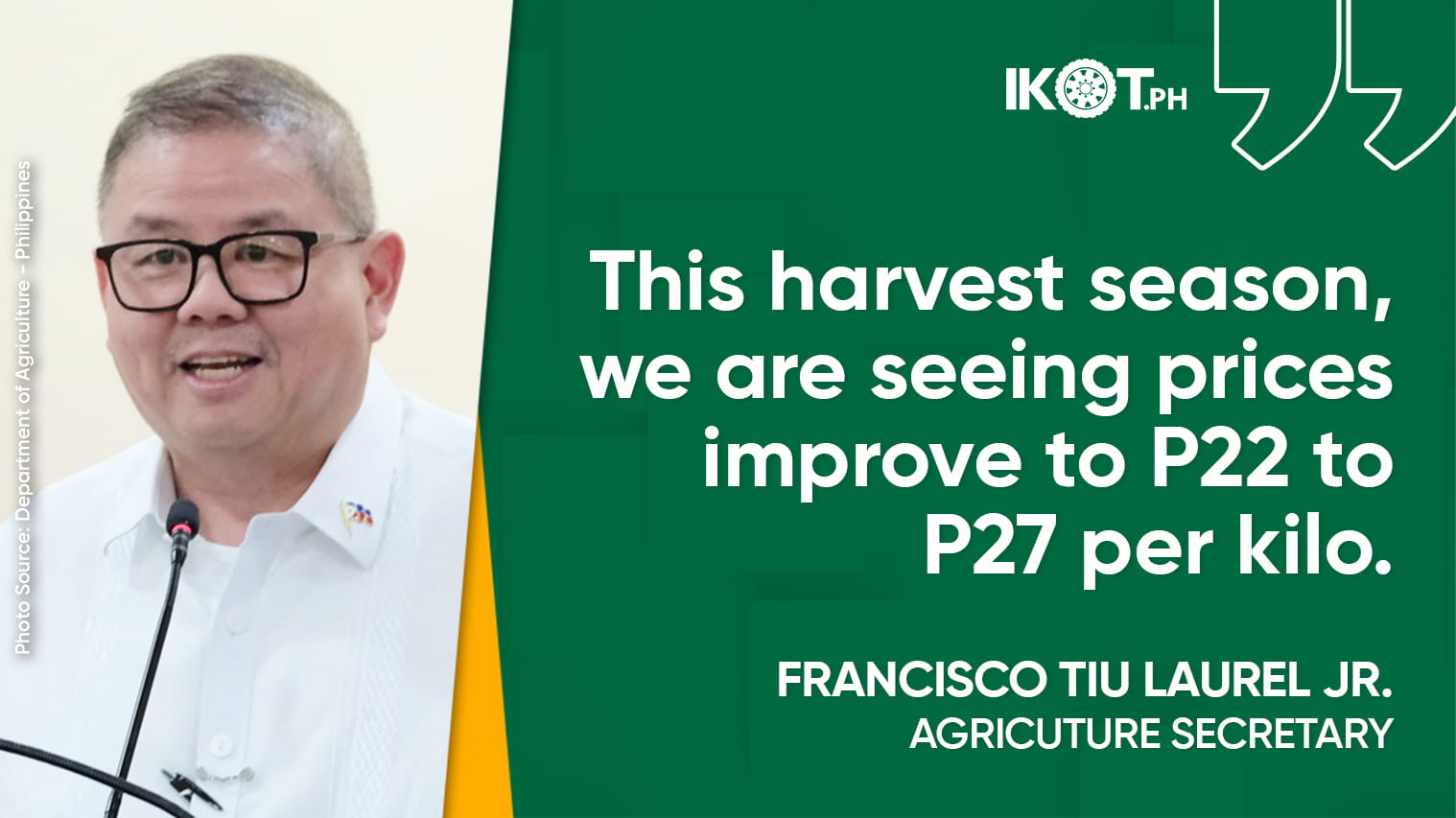
“Many farmers decided not to plant last season because they were still recovering from losses when palay prices were between P10 and P12 per kilo,” Tiu Laurel said. “This harvest season, we are seeing prices improve to P22 to P27 per kilo, and we hope this continues so farmers are encouraged to plant more for the next season.”
The agriculture chief said the improved price environment is already supporting expectations of a better dry-season harvest and is likely to boost planting activity in the coming months, reversing earlier cautious output decisions triggered by low farmgate prices, typhoon damage, and irrigation constraints.
At its weakest point last year, palay prices fell significantly below production costs, with farmgate prices dropping to as low as around P8 per kilo in some areas, while averaging only around P10 to P12 per kilo in many markets.
This forced many farmers to scale back or delay planting. The subsequent recovery in prices has been attributed in part to supply-tightening measures, including a temporary rice import restriction between September and December ordered by president Ferdinand Marcos jr., which helped stabilize domestic market conditions and lift farmgate values.
“We are studying a voucher system to improve access to farm inputs and encourage the use of organic fertilizers to help reduce production costs.”
The agriculture department said it is complementing the price recovery with continued support measures, including fertilizer and fuel subsidies, faster distribution of inputs, and expanded financial assistance. It is also studying a voucher system to improve access to farm inputs and encouraging the use of organic fertilizers to help reduce production costs.
While the outlook is improving, earlier production data still reflected the impact of last year’s challenges. The Philippine Statistics Authority reported that first-quarter palay output declined to 4.4 million metric tons from 4.69 million metric tons a year earlier, largely due to planting decisions made during the period of weak prices and weather disturbances in key producing regions.
Most of the harvested crops in the first quarter were planted during late 2025, when a series of typhoons brought heavy rains and flooding to major rice-growing areas, including cagayan valley and western visayas, damaging standing crops and limiting production potential.
The agriculture head also pointed to the damaged irrigation system affecting roughly 37,000 hectares served by the National Irrigation Administration’s upper pampanga river integrated irrigation system (NIA-UPRIIS) which limited supply in key farming areas.
With prices now stronger and government support measures in place, officials say the conditions are aligning for a recovery in both output and farmer participation in the coming seasons.