
The Department of Education (DepEd) is preparing to scale its artificial intelligence (AI) applications nationwide following a successful pilot phase aimed at improving school safety, early childhood screening, and classroom retention.
During the second anniversary of DepEd’s Education Center for AI Research (ECAIR), education leaders, government partners, and industry stakeholders gathered to review how AI solutions have been integrated into day-to-day school operations over the past year.
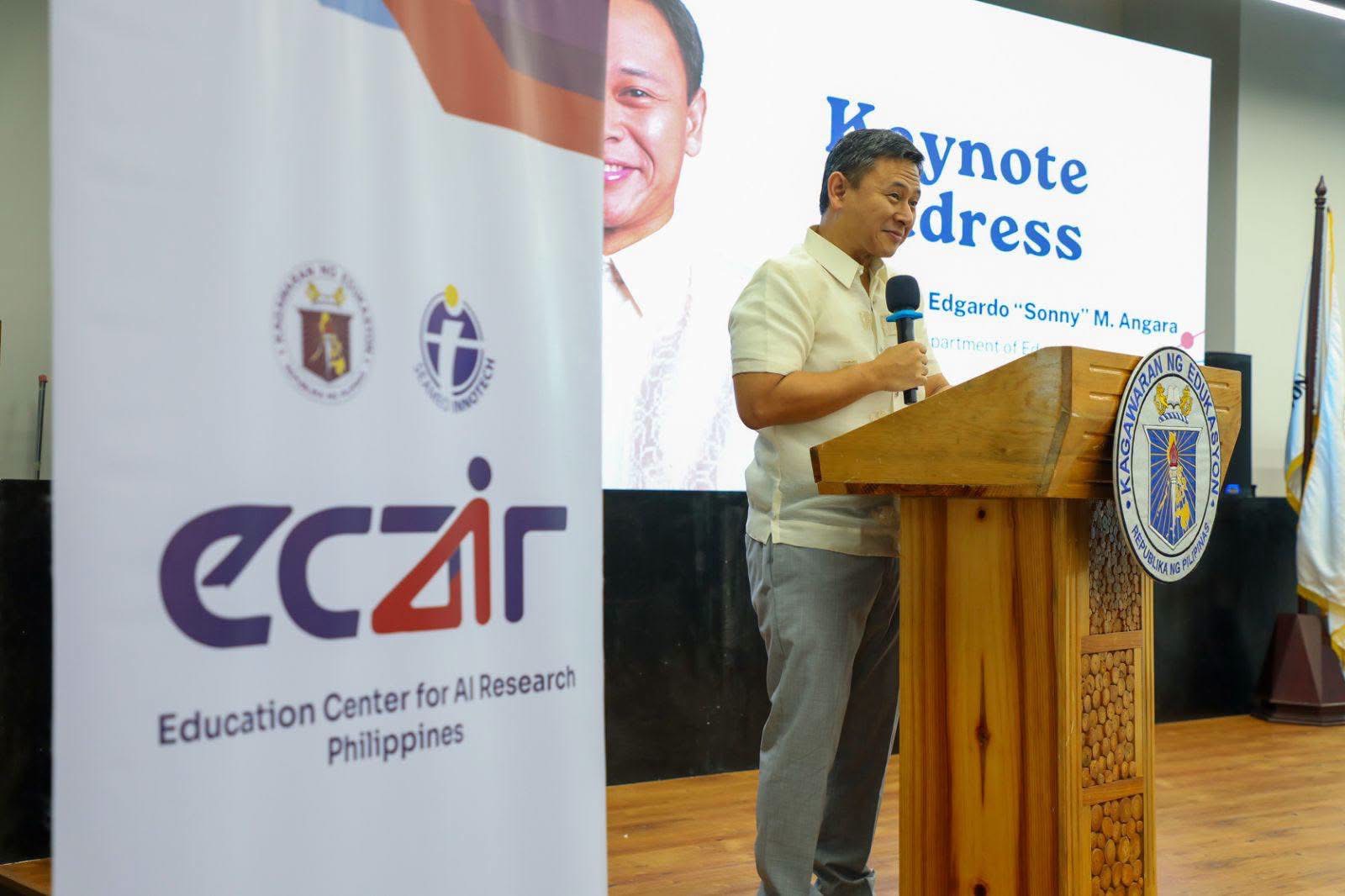
Education Secretary Sonny Angara highlighted how technology streamlines department processes while supporting frontline educators.
“Malaki talaga ang ambag ng ECAIR sa pagpapagaan ng ating responsibilidad at pagpapahusay ng ating proseso dito sa DepEd. Iyan ang mahalagang papel ng ECAIR: maging katuwang ng DepEd at SEAMEO INNOTECH sa paghubog ng isang mas matalino at mas makataong sistema ng edukasyon,” Angara said.
Among ECAIR’s primary innovations is LIGTAS+ (Learning Institution Geohazard Tracking and Assessment for Safety) that turns data from PAGASA, PHIVOLCS and global AI weather models into hazard information for each school.
Angara outlined three guiding principles for the expansion: sustaining operational momentum, strengthening public trust in responsible AI, and ensuring technology complements human capabilities.
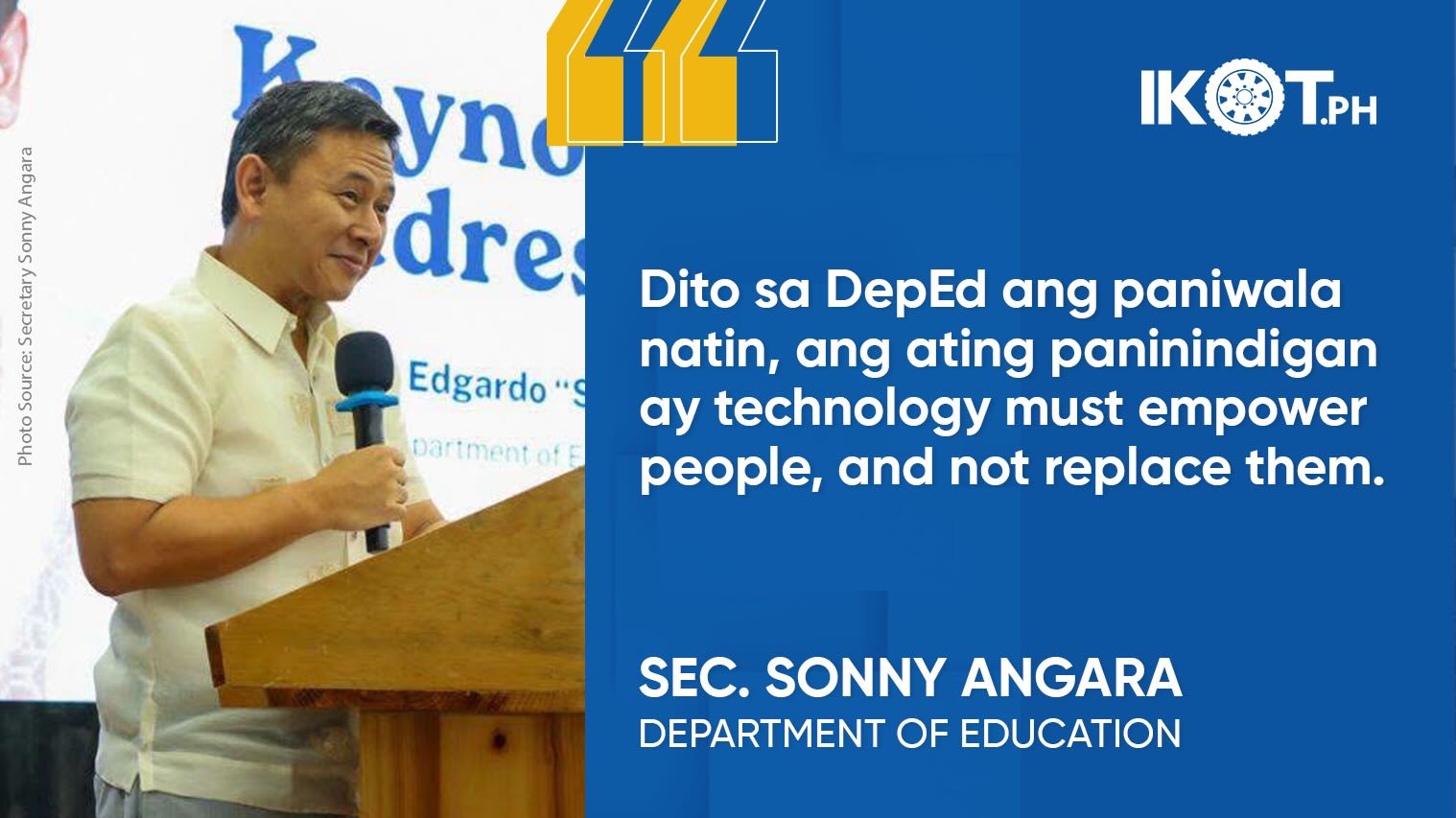
“Let us erase the misconception that AI and technology will eventually replace people in schools and the workplace. Dito sa DepEd ang paniwala natin, ang ating paninindigan ay technology must empower people, and not replace them,” Angara emphasized.
Dr. Majah-Leah V. Ravago, Centre Director of SEAMEO INNOTECH, a partner organization of ECAIR, said innovation must go beyond research and technology and make a difference in classrooms and school communities.
“First, sustain what has worked. Second, scale what is ready. And third, ensure that every innovation remains grounded in the realities and needs of our classrooms,” Dr. Ravago said.
ECAIR was established under DepEd Order No. 13, s. 2025. “Nearly two years ago, it gave a small team a big mandate: to use AI and data so that every Filipino learner can learn better,” said ECAIR Managing Director and Chief AI and Data Officer Dr. Erika Fille Legara.
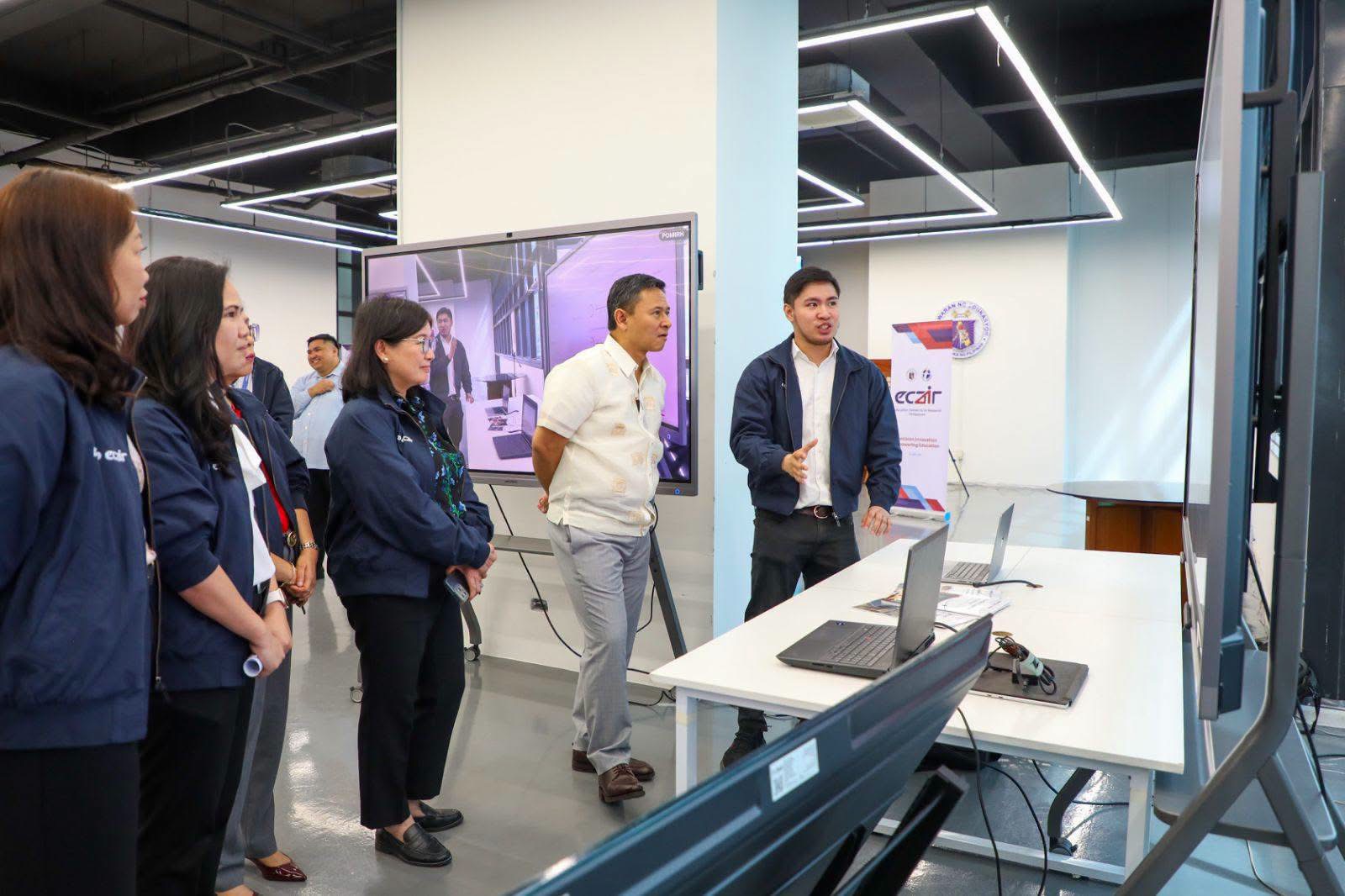
Among ECAIR’s primary innovations is LIGTAS+ (Learning Institution Geohazard Tracking and Assessment for Safety) that turns data from PAGASA, PHIVOLCS and global AI weather models into hazard information for each school. Since its August launch, it has reached over 57,000 users, most of them DepEd personnel, while Disaster Risk Reduction and Management (DRRM) teams have generated over 6,000 situation reports with it.
SABAY (Screening using AI-Based Assistance for Young Children), which was co-developed with DepEd’s Bureau of Learning Delivery, lets teachers screen Grade 2 learners for possible communication and learning difficulties through short speech activities in 14.5 minutes per learner against up to two hours with existing tools. It has been tested in 10 schools across five regions.
Meanwhile TALAAN (Teachers’ and Administrators’ Learner-centric Almanac and Analytics Nest), an early warning system for learners at risk of dropping out, was co-designed with about 120 teachers and school heads in three Las Piñas schools.
Additional projects include STRIVE, which checks construction site photos; SIGLA, which screens learners’ nutrition; and TALINO, which matches Adopt-a-School donors with schools in need. Furthermore, the National Work Immersion Pledging Dashboard for Senior High School learners tracked 61,289 slots pledged by 3,089 companies, reaching 122.6% of the national target.
ECAIR also trained 52 personnel from DepEd and the Technical Education and Skills Development Authority (TESDA) to build their own AI tools.
Next year, TALAAN will expand to 300 schools and SABAY will roll out nationwide.