
Senate Committee on Environment and Natural Resources Chairperson Senator Raffy Tulfo challenged the statement of Department of Health (DOH) Environmental and Occupational Health Division Chief Dr. Gabriel Borlongan that foul-smelling landfills have no direct effect on people’s health.
During the committee hearing, Tulfo asked Borlongan whether the DOH has data on diseases that may affect individuals working in landfill areas, where they may be exposed to toxic and contaminated substances such as mercury.
“For the past years, maraming lumalapit sa aking programa na mga tao na nakatira malapit sa babuyan, sa landfill at sila ay nagkakaroon daw ng asthma, lalo na ang mga bata at senior citizens, humihina pa ang immune system. Dapat ay pag-aralan ninyo ito,” the legislator said.
“Exposure to hazardous chemicals in landfill sites may lead to infectious diseases and abnormalities in the immune system.”
Borlongan admitted that the DOH does not conduct routine monitoring and surveillance of such cases. He also acknowledged that, based on both local and international studies, exposure to hazardous chemicals in landfill sites may lead to infectious diseases and abnormalities in the immune system.
Tulfo also questioned how the DOH could conclude that foul-smelling landfills have no direct impact on public health despite numerous complaints received through his public service program from residents living near piggeries and landfill sites.
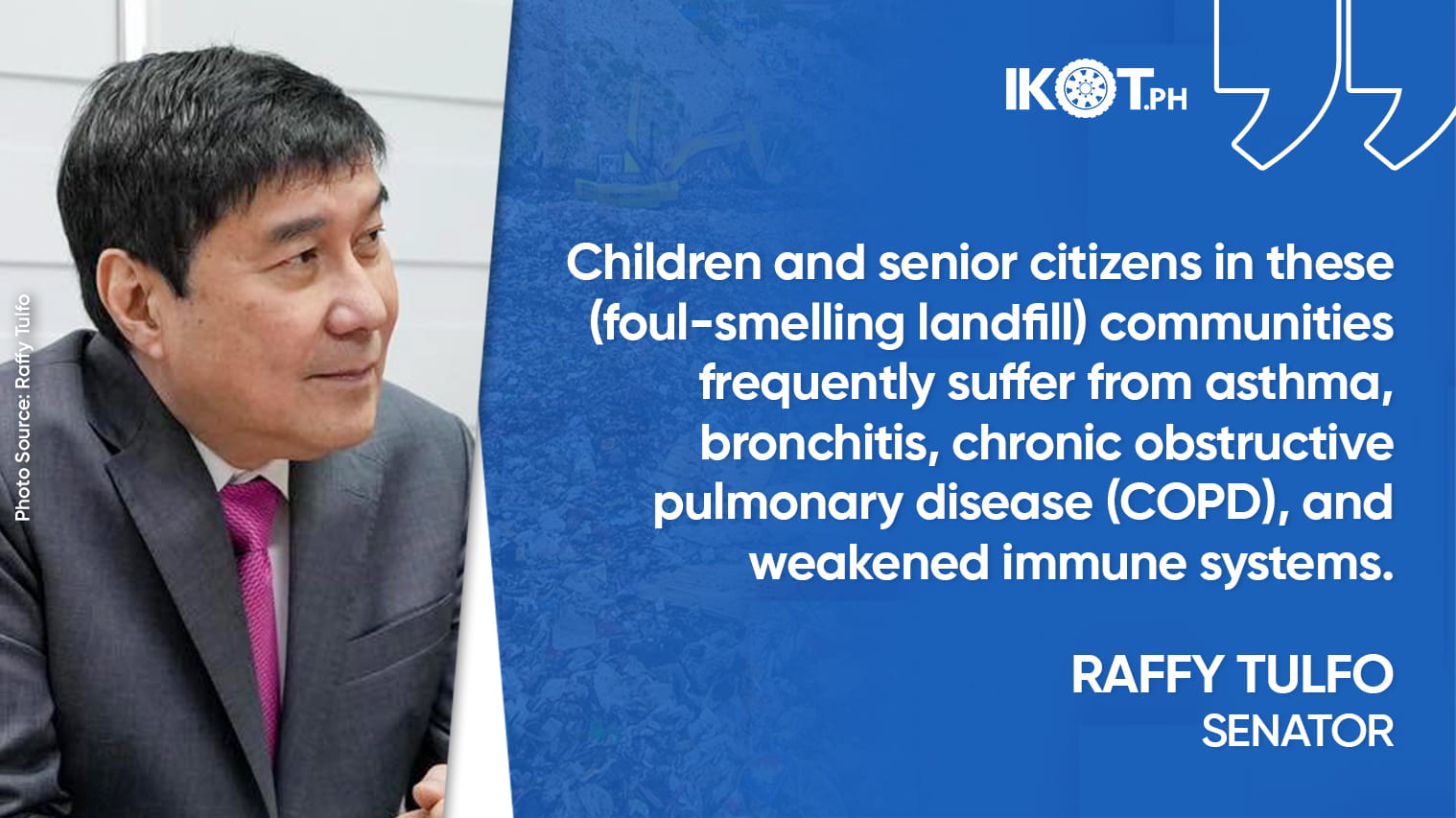
According to the lawmaker, children and senior citizens in these communities frequently suffer from asthma, bronchitis, chronic obstructive pulmonary disease (COPD), and weakened immune systems.
“Study the possibility of ensuring the availability of sufficient medicines in barangay health centers for residents suffering from these illnesses.”
In light of these concerns, the senator expressed disappointment over what he described as the government’s lack of adequate preparedness to address the issue. He urged the DOH to study the possibility of ensuring the availability of sufficient medicines in barangay health centers for residents suffering from these illnesses, a recommendation that Borlongan agreed to consider.
Borlongan likewise acknowledged the senator’s point that prolonged exposure to toxic waste, including hydrogen sulfide, may trigger asthma and other respiratory diseases that pose serious health risks and therefore require immediate government action.
While Borlongan said he could not directly answer questions regarding the health effects of landfill collapses, he noted that the DOH could coordinate with other government agencies involved in disaster response to better prepare for such incidents, including their physical, chemical, and biological impacts.