
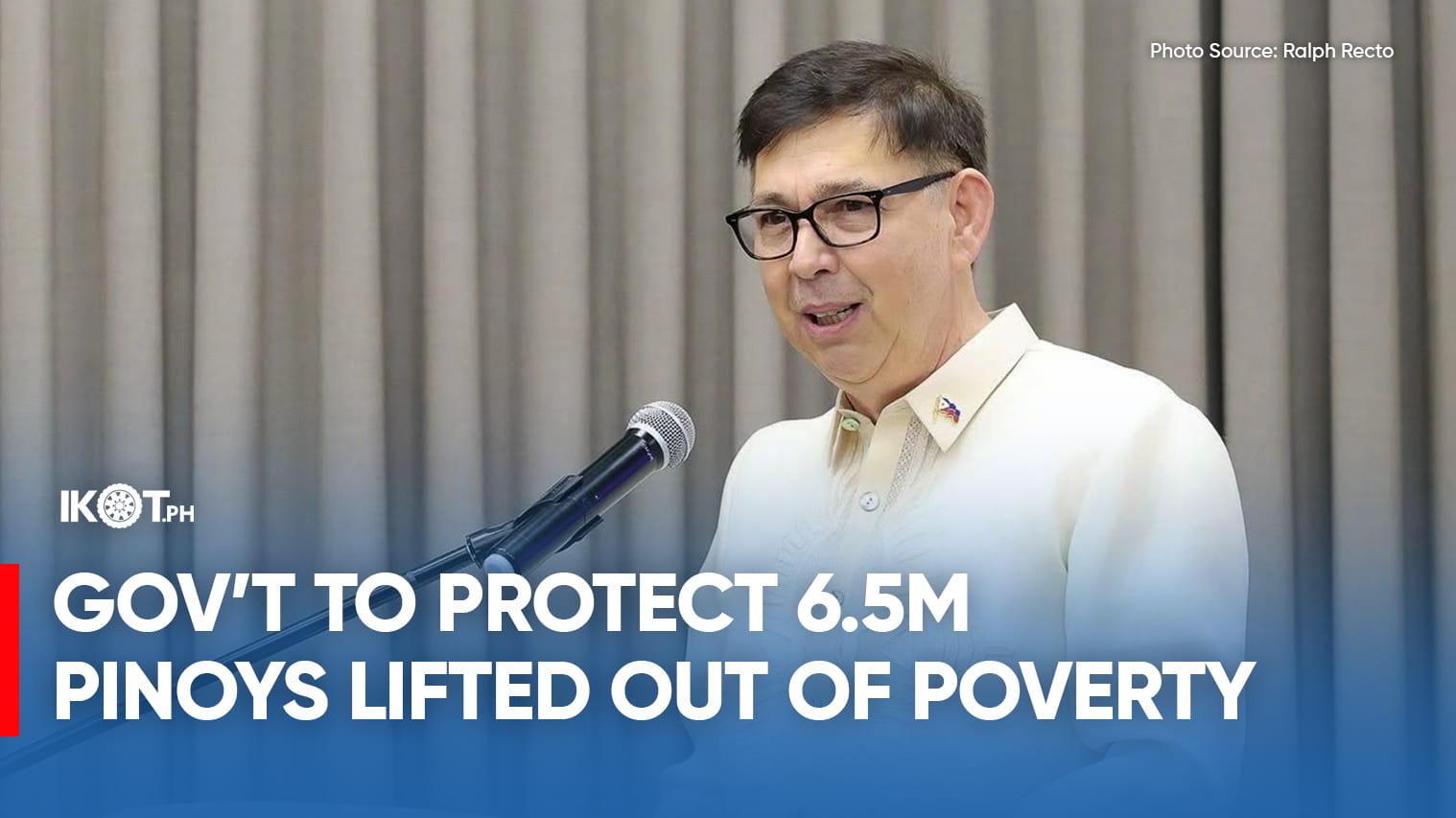
The Marcos administration will boost protection for the 6.5 million Filipinos lifted out of poverty during the last two years, while creating more jobs, raising incomes, and lowering living costs of the middle class.
“That is the marching order of the President: Support the middle class and prevent 6.5 million Filipinos from sliding back into the zone of poverty,” Executive Secretary Ralph Recto said.
This after poverty incidence fell sharply from 15.5 % in 2023 to 9.7% in 2025, cutting the number of poor Filipinos from 17.5 million to 11 million, three years ahead of its goal to bring it down to the single digits by 2028.
“But this is not the time to rest. That goal is not the finish line. The work goes on,” Recto said.
“Ang susunod nating hamon ay siguraduhing tuloy-tuloy ang pag-angat nila.”
“Ang susunod nating hamon ay siguraduhing tuloy-tuloy ang pag-angat nila. Hindi na muling babalik sa kahirapan ang mga nakaahon na, at dadami ang makakaahon pa. At mas protektahan pa natin ang ating middle class,” he added.
Recto emphasized that the government will not be complacent, as the unresolved Middle East crisis poses risks to fuel and food prices, trade, employment, and economic growth.
“Then there are climate disruptions like the projected strong El Nino which is causing too much rainfall in Luzon but too little of it in Mindanao,” he said.
How to address these has been merged “into a program that will fast-track high-impact infrastructure projects that can generate jobs, stimulate local economies, reduce logistics costs, and attract more investments.”
To complement these, the administration is pushing measures that will lower household expenses, increase disposable income, strengthen the middle class, and spur consumption.
These include raising the personal income tax exemption of individuals to P350,000 annually, freeing up to P17,500 every year per worker, and converting a tax payment to purchasing power.
Also part of Malacanang’s legislative push is the exemption of small businesses from the Minimum Corporate Income Tax, a general tax amnesty, and the abolition of the travel tax.
It is also pressing Congress to amend the Electric Power Industry Reform Act (EPIRA) to bar distribution utilities and electric cooperatives from passing system loss charges to ordinary consumers.
Another energy measure it wants passed is the Sariling Kuryente Act which makes the installation of solar and battery systems simple, easy, and cheap for households.
“The administration will continue prioritizing price stability measures to keep food, fuel, electricity, and other basic necessities affordable.”
Recto said the administration will “continue prioritizing price stability measures” to keep food, fuel, electricity, and other basic necessities affordable, while continuing targeted support for sectors most vulnerable to economic shocks.
He cited the Expanded UPLIFT assistance for 7.5 million families and the Bawat Bayan Makikinabang Rice Program for 8 million households “as just one example of the government’s commitment to shield the vulnerable”.
A particular focus is how the country can leverage its “competitive assets in seizing investment and job opportunities that rapidly expanding global artificial intelligence and digital economy offer.”
Many public investments will be funneled to this area, through better schools, improved health care, and modern infrastructure.
Recto said these measures – from executive actions to legislative initiatives – form part of a broader strategy not simply to reduce poverty, but to build a larger and more resilient Filipino middle class.