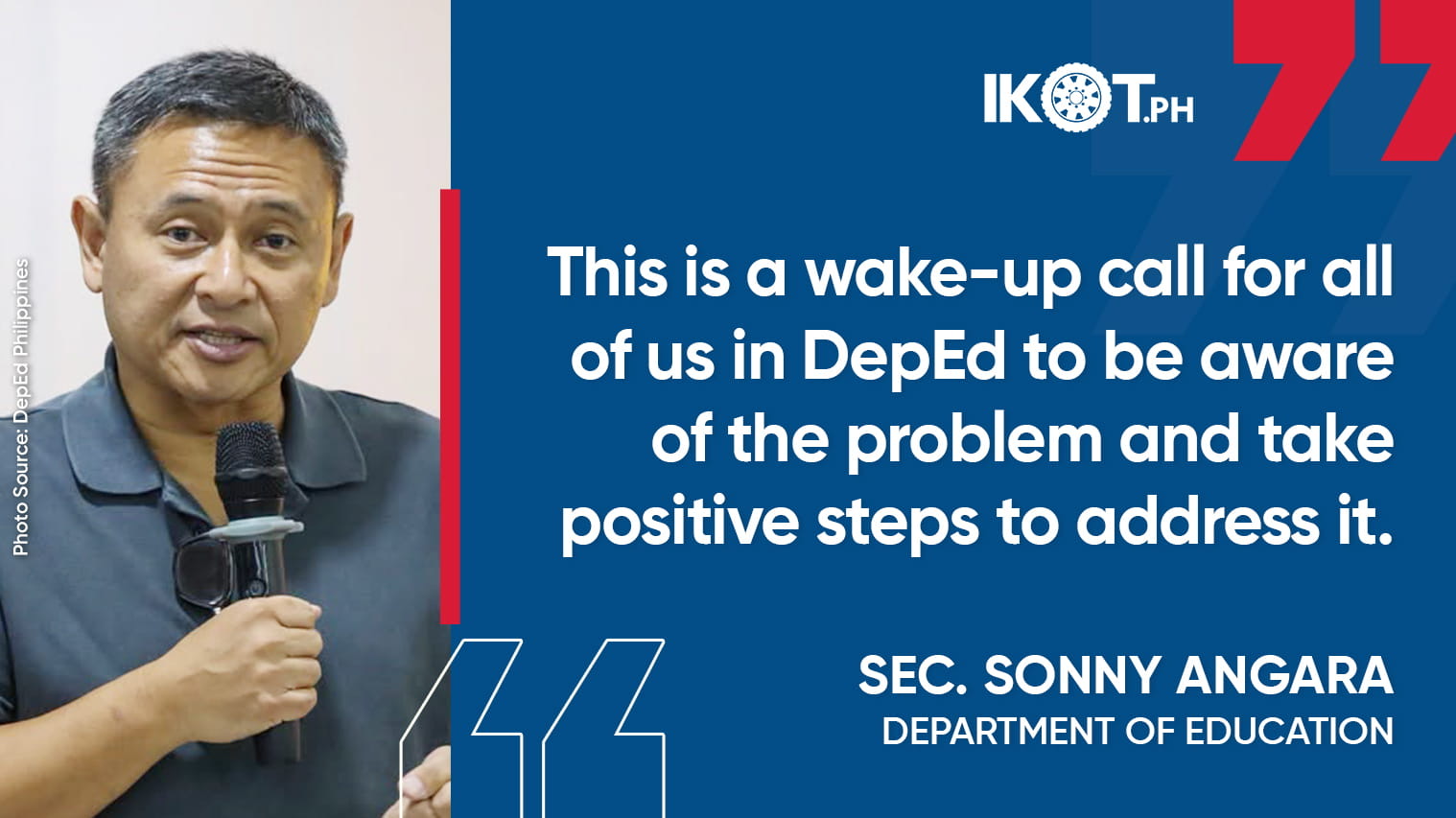
Education Secretary Sonny Angara called on parents and guardians to closely monitor their children’s online activities while urging teachers to act as compassionate “foster parents” at school, pointing out that teenagers are increasingly vulnerable to harmful online influences.
Secretary Angara highlighted the vulnerability of today’s youth to digital influences and underscored the need for stronger interpersonal connections within school communities.
“This is a wake-up call for all of us in DepEd to be aware of the problem and take positive steps to address it. We acknowledge the academic gains made by our teachers, but in terms of addressing the emotional problems of our children, we still have crucial work to do,” Angara said, following the recent school shooting incidents, the latest in Banga, South Cotabato.
While celebrating recent educational strides, such as the country’s improved performance in the Programme for International Student Assessment (PISA) 2025 and learning recovery gains through the Academic Recovery and Accessible Learning (ARAL) Program, Angara reiterated that protecting learners’ mental health and safety remains paramount.
“We can overcome this. But we must acknowledge that there is a mental health epidemic among our youth today and we must look to the roots of this and understand it.”
“Bagama’t gumanda ang ating performance sa academics at ang ating worldwide standing sa international rankings, let’s take a step back and examine how we are relating and what kind of school communities we are building,” Angara said. “Dahil iba na po ang pag-iisip ng ating kabataan ngayon. Kilalanin natin iyan at gumawa tayo ng paraan, sama-sama po tayo sa DepEd.”

Angara said alongside enforcing stricter security measures in schools, the Department of Education (DepEd) is reviewing current policies to encourage teachers and staff to spend more dedicated time connecting directly with learners and checking on their well-being.
Stressing that there are existing cellphone restrictions in schools, Angara emphasized that policy enforcement alone cannot solve the problem and urged parents and guardians to actively supervise smartphone and social media usage at home to protect children from negative online influences.
DepEd is expanding its Kaagapay Program nationwide to equip parent communities with practical tools through capacity-building sessions to identify red flags, manage behavioral issues, and directly coordinate with school Child Protection Committees (CPCs) and guidance personnel.
“Dahil iba na po ang pag-iisip ng ating kabataan ngayon. Kilalanin natin iyan at gumawa tayo ng paraan, sama-sama po tayo sa DepEd.”
At the same time, Angara highlighted the critical role of teachers in filling emotional gaps for learners who feel isolated or unacknowledged.
“For those who are very susceptible to influence from whatever they see online, and those who are looking for validation from their families but perhaps do not receive it, let us give them that as their foster parents at school,” Angara urged. “Ibigay natin ang pagmamahal at atensyon. Kapag may tagumpay sila, kilalanin at i-acknowledge natin.”
He advised educators to practice simple yet meaningful interventions, such as knowing learners’ names, understanding their daily struggles, and regularly checking in on their well-being.
“We can overcome this. But we must acknowledge that there is a mental health epidemic among our youth today and we must look to the roots of this and understand it. Otherwise, I hesitate to say, more people might get hurt. So kilalanin natin iyan at gumawa tayo ng paraan. Sama-sama po tayo sa DepEd,” Angara said.
Angara emphasized that protecting learners is a shared responsibility, adding that close collaboration among schools, parents, and communities is essential to ensuring every Filipino child remains safe and cared for.