Philippine pineapple and abaca fibers took the global spotlight at AgriThreads: From Farm to Sustainable Fashion Innovation Challenge, a featured session of the Food and Agriculture Organization’s (FAO) World Food Forum (WFF) 2026 flagship event in Rome, Italy.
The showcase highlighted the potential of the Philippines’ agricultural resources to shape the future of sustainable fashion and open new opportunities for local producers.
Held alongside the Hand-in-Hand Investment Forum, AgriThreads brought together international partners and design students to explore how agricultural resources can be transformed into innovative materials for fashion, the bioeconomy, and circular design.
Representing the Philippines were Department of Agriculture Assistant Secretary Atty. Genevieve Velicaria-Guevarra and Deputy Permanent Representative of the Philippines to FAO and Agriculture Attaché to Italy Dr. Josyline Javelosa.
One design showcased a sheer, undyed fabric that highlighted the fibers’ natural qualities, while pineapple leather patterns drew inspiration from the country’s iconic rice terraces.
The challenge featured students from John Cabot University and Coloriage Fashion School, who unveiled creative designs using sustainable materials sourced from different countries, including Philippine pineapple and abaca fibers. One design showcased a sheer, undyed fabric that highlighted the fibers’ natural qualities, while pineapple leather patterns drew inspiration from the country’s iconic rice terraces.
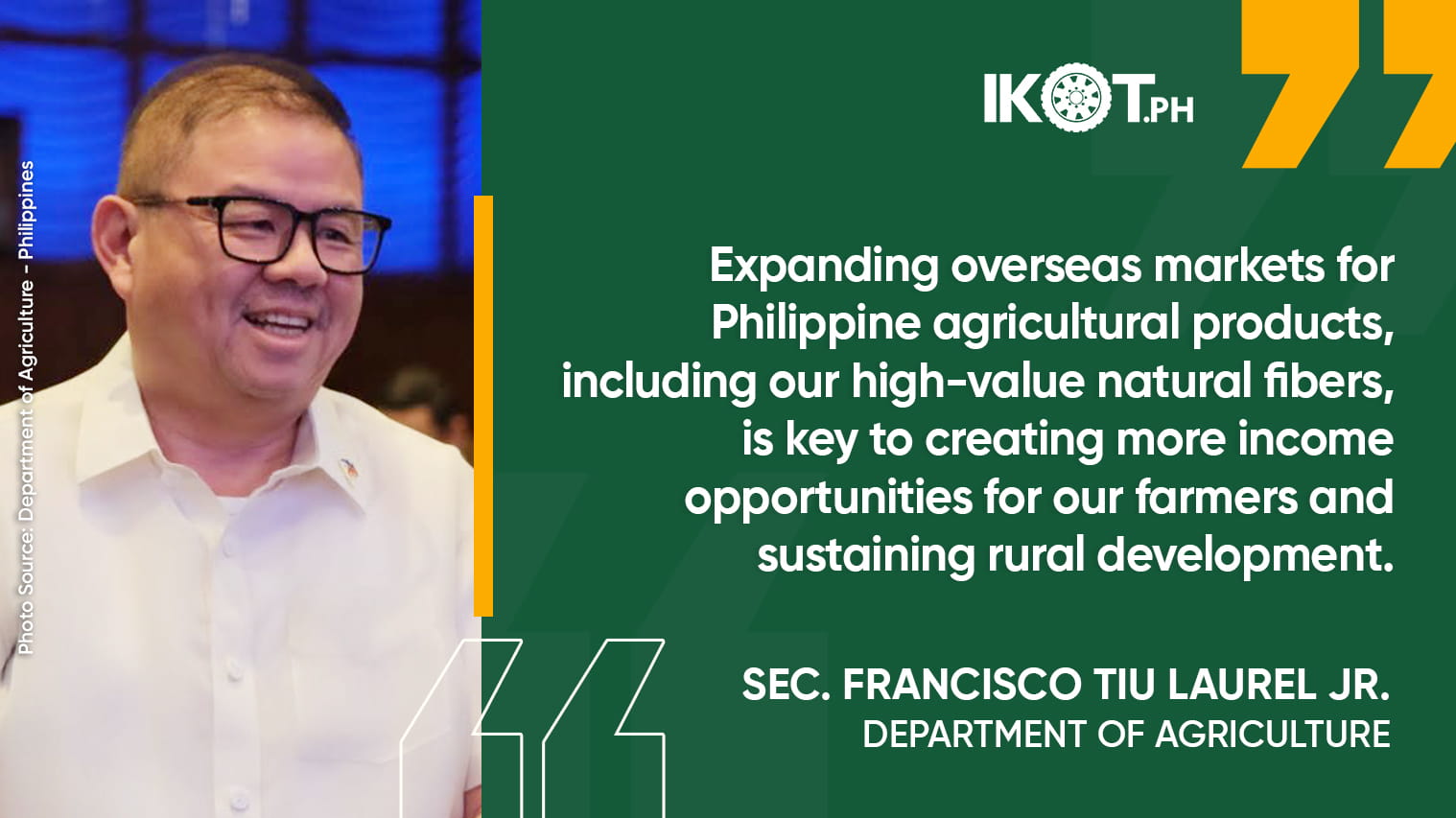
“Expanding overseas markets for Philippine agricultural products, including our high-value natural fibers, is key to creating more income opportunities for our farmers and sustaining rural development,” Agriculture Secretary Francisco Tiu Laurel Jr. said in a statement.
The challenge also featured fish leather from Kenya, banana fiber from Pakistan, cork waste from Portugal, alpaca fiber from Chile, and seaweed fiber from Saudi Arabia, demonstrating how agricultural and natural resources can inspire innovative alternatives for the global fashion industry.
Tiu Laurel said connecting Philippine agricultural products with international industries can help unlock greater value from local resources and strengthen the country’s position in emerging sustainable markets.
“By linking our agricultural resources to global industries such as sustainable fashion, we can create new markets for homegrown products, strengthen agricultural value chains, and ensure that more economic opportunities reach farming communities.”
“By linking our agricultural resources to global industries such as sustainable fashion, we can create new markets for homegrown products, strengthen agricultural value chains, and ensure that more economic opportunities reach farming communities,” the agriculture chief stressed.
The Philippine showcase underscored the potential of traditional fibers to become high-value, globally competitive materials while promoting resource efficiency and environmentally conscious design.
Through initiatives such as AgriThreads, the Philippines is advancing a vision that goes beyond raw-material production: transforming its agricultural heritage into marketable innovations, expanding export opportunities, and creating pathways for more inclusive and sustainable rural development.