
To expand its budget transparency efforts this year, the Senate will push not only for continuous livestreaming of bicameral conference committee proceedings on the proposed 2027 national budget, but also for transcripts of the discussions, Senator Ping Lacson said.
Lacson said the transcripts would help lawmakers and the public identify who initiated amendments to the budget bill, and track who pushed for realignments of its items.
“Kailangan may minutes ‘yan para maliwanag sino nag-initiate ng amendment at sino nagtulak ng realignment.”
“Ang bicam, dapat lagyan ng minutes, naka-record ang transcript. Ito lang ang bicam sa lahat ng measure na walang transcript. Hindi maintindihan kung sino nag-introduce ng amendment. Meron na dapat ngayon. For the longest time walang transcript ‘yan,” the veteran legislator said in an interview on DZMM radio.
“Kailangan may minutes ‘yan para maliwanag sino nag-initiate ng amendment at sino nagtulak ng realignment,” the seasoned lawmaker added.
Lacson said the Senate also plans to build on the transparency measures for the budget measure, aside from those it implemented in last year’s proceedings for the 2026 budget.
These included identifying senators who proposed amendments to the budget bill, and posting the proceedings on the Senate’s website for the public to see.
For this year’s budget deliberations, he said the Senate plans to invite budget advocacy groups like the People’s Budget Coalition to the bicameral proceedings to better ensure transparency. The senator likened the advocacy groups to “guardia civil” who check against abuses in the crafting of the budget measure.
“Baka pwede na sila mag resort sa shaming para pwedeng tablan ng hiya ang iba.”
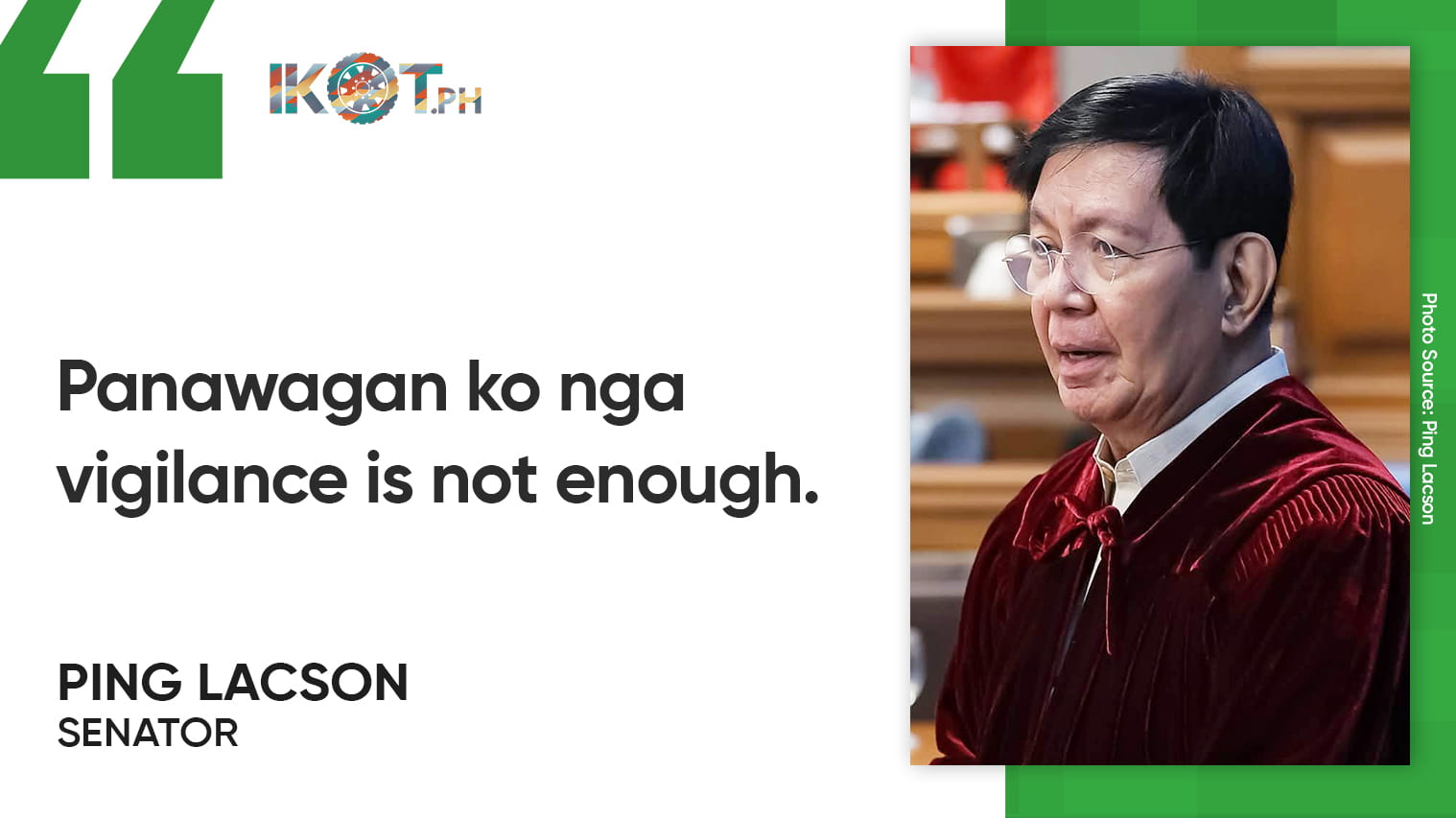
“Panawagan ko nga vigilance is not enough. Panawagan ko sa kanila baka pwede na sila mag resort sa shaming para pwedeng tablan ng hiya ang iba,” he stressed.
Lacson cited the practice of making project insertions at two stages of the budget process, which he described as “double kill” – first in the National Expenditure Program, and again after it is transmitted to the House of Representatives and the Senate.
“’Pag nagsingit ka sa NEP, pag-transmit sa HOR and Senate sisingit uli. Double kill,” he added.
In an interview on DZBB, Lacson had raised concerns over questionable coordinates in the proposed 2027 national budget flagged by budget advocacy groups, saying these could indicate deliberate acts rather than mere typographical errors.
“Hindi katanggap-tanggap. Akala ko malayo na ‘yung Leyte, hanggang sa marinig ko yung People’s Budget Coalition, umabot pa ng Celebes Sea. So hindi ito typo error kasi naka-geotag, dapat pinpointed talaga. ‘Yun ang gamit nga ng geotagging, na kung saan madaling hanapin yung project at madaling ma-inspect para ‘pag ‘yung quality control nila, madaling malaman kung talaga nagawa ‘yung proyekto,” he stressed.
“Hindi oversight ito. Medyo obvious na deliberate,” Lacson said on DZXL radio.
Meanwhile, Lacson said he and his fellow senators will rely on the guidelines and requirements set by the new Department of Public Works and Highways (DPWH) Sec. Giovanni Lopez for the funding of projects – including program of works, feasibility study, and geotagging.
He pointed out as well that the Unified Account Code Structure (UACS) must be retained “all the way” throughout the budget process to ensure easier tracking of projects for implementation.
“May mga codes ito, may mga numbers lalo madaling matukoy kung nasaan ‘yung proyekto, kasi code structure ‘yun, ‘yung lahat ng mga proyekto na doon, himay na himay doon. Ang masama, pagka binabalangkas sa GAB at saka sa Senate, nabubura ‘yung UACS,” Lacson concluded.