The Philippines highlighted its push to translate commitments on women’s leadership into concrete gains, telling ASEAN partners that empowering women strengthens governance and communities.
Sorsogon Representative Bernadette Escudero, presenting the country’s progress report at the 5th Meeting of the Coordinating Committee of Women Parliamentarians of the ASEAN Inter-Parliamentary Assembly (WAIPA), outlined the Philippines’ implementation of the Women’s Political Participation and Leadership (WPPL) Plan of Action 2024–2030.
“When women lead, our democracy gets stronger, our government works better, and our communities truly thrive.”
“The Philippines is here today with a very simple but powerful message: when women lead, our democracy gets stronger, our government works better, and our communities truly thrive,” Escudero said.
“We are not just talking about representation as a checkbox; we are talking about it as the backbone of our future,” the veteran legislator added.
The seasoned lawmaker explained the country’s efforts are anchored on the Constitution and the Magna Carta of Women, ensuring that gender equality is embedded in laws, policies and budgets.
She reported that women now make up 28 percent of members of the House of Representatives, with many leading key committees and serving as Deputy Speakers, while women also hold a majority of leadership roles among parliamentary staff.
“We are proud to show how we are putting the WAIPA Plan of Action into real-world practice,” Escudero said.
The Philippines has also strengthened institutional mechanisms, including the Committee on Women and Gender Equality and the Gender and Development (GAD) Focal Point System, while working closely with the Philippine Commission on Women and multi-party groups such as the Association of Women Legislators Foundation.
She underscored that inclusion remains central to these efforts, with consultations reaching women in rural areas, indigenous communities, and geographically isolated sectors.
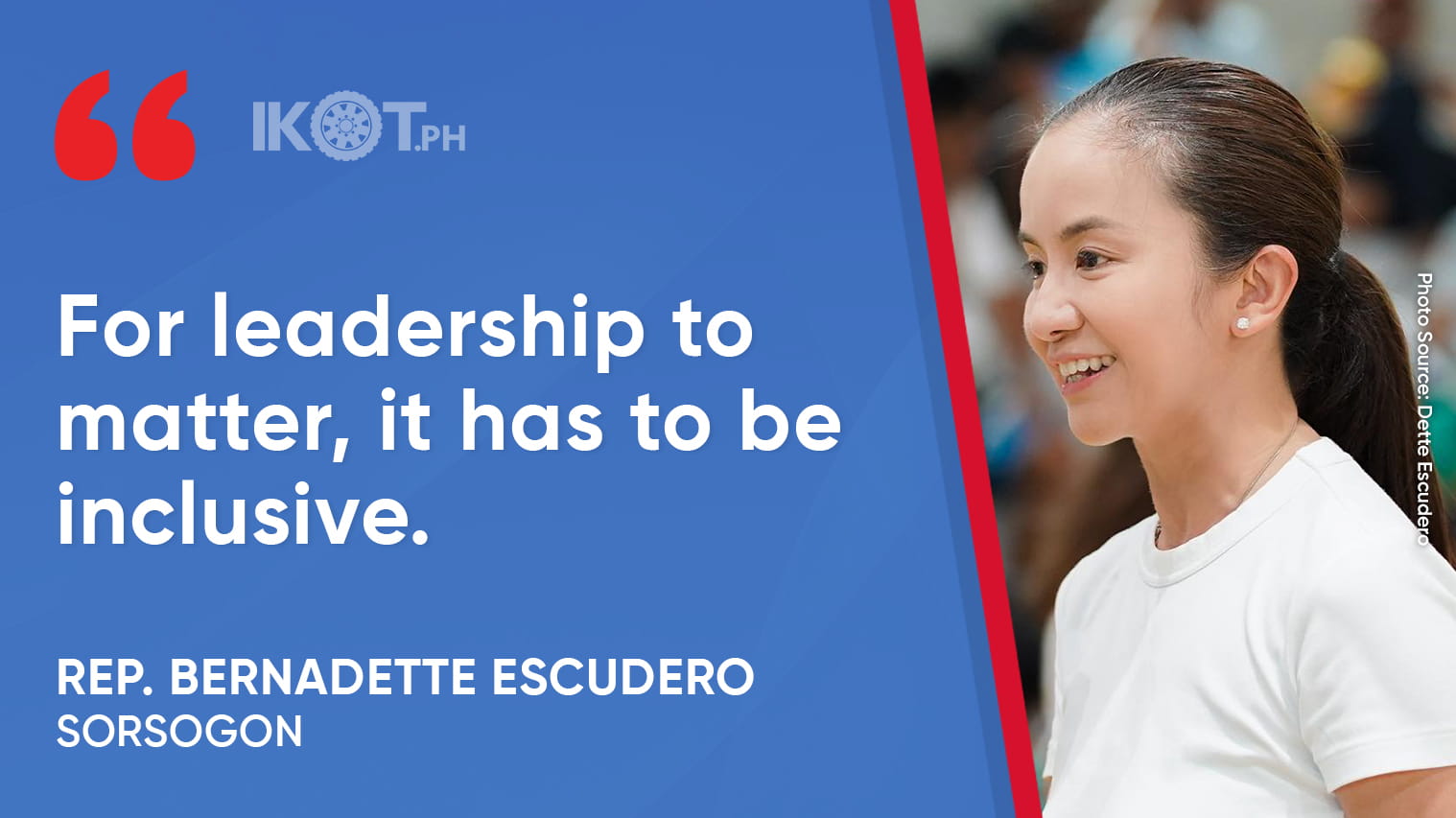
“For leadership to matter, it has to be inclusive,” Escudero said.
She added that gender-responsive budgeting continues to drive reforms, noting that all government agencies are required to allocate at least 5 percent of their budgets for GAD programs, supporting training, capacity-building, and policy development.
At the same time, Escudero acknowledged gaps that must be addressed, including the need for stronger mentorship programs and improved gender-disaggregated data systems.
“We need better, centralized sex- and gender-disaggregated data so we can see the full picture of who is participating and where the gaps still remain,” she stressed.
Looking ahead, Escudero said the Philippines will focus on strengthening monitoring systems, expanding engagement with marginalized women, and deepening institutional capacity.
“The Philippines has a solid foundation, but we know the job is not done.”
“The Philippines has a solid foundation, but we know the job is not done,” she stressed.
“We are fully committed to working with our ASEAN neighbors under WAIPA to turn these plans into real, life-changing opportunities for women across the region,” Escudero concluded.