
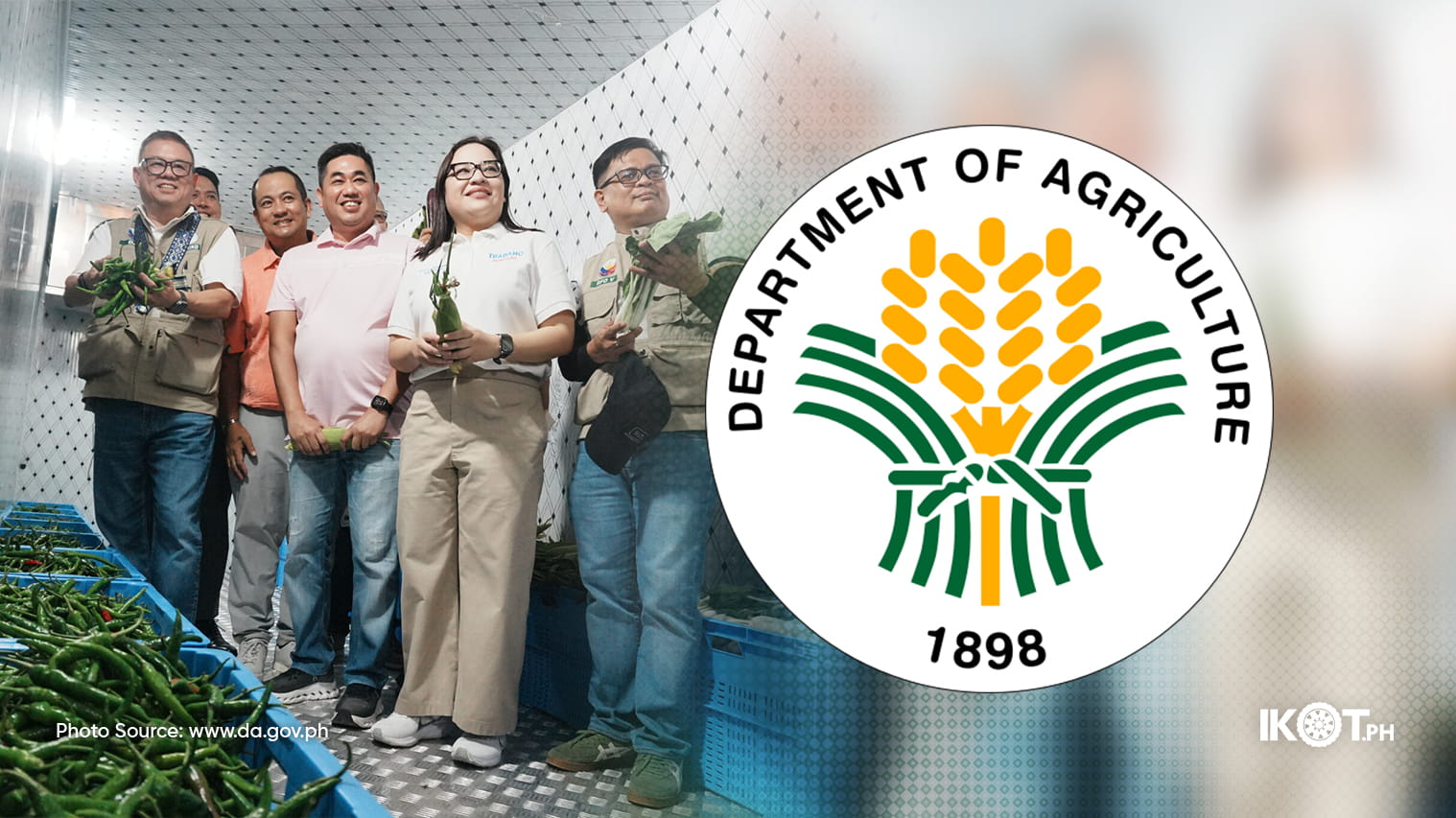
The Department of Agriculture opened a solar- and wind-powered modular cold storage facility and a P51.5-million slaughterhouse in San Jose, Camarines Sur that is expected to reduce post-harvest losses, improve meat-handling services, and expand income opportunities for farmers, fisherfolk, and livestock raisers.
Similar modular, renewable-energy power cold storage facilities were also turned over by the DA in the towns of Garchitorena, Lagonoy, and Tigaon, also in Camarines Sur. The cold storage facilities, including the one in San Jose, were worth a total of P45.5 million.
The DA also distributed P79.6 million worth of interventions such as 4WD tractor, combine harvester, seeds, garden tools, boats, and fishing gears.
The new post-harvest infrastructures and interventions will benefit over 10,762 farmers, fisherfolk, and other food producers in 10 towns of Camarines Sur.
The slaughterhouse is expected to benefit 1,303 livestock raisers across 29 barangays. Of its P51.5-million cost, P41.2 million is financed through a World Bank loan, with the remaining balance shared equally by the local government unit and the national government.
Agriculture Secretary Francisco Tiu Laurel Jr. said the two facilities are intended to strengthen local food supply chains while creating opportunities for jobs and broader economic activity.
“By reducing post-harvest losses, improving meat-handling services and connecting local producers to better markets, we can help them earn more from their hard work.”
“These facilities are investments in the livelihoods of our farmers, fisherfolk and livestock raisers. By reducing post-harvest losses, improving meat-handling services and connecting local producers to better markets, we can help them earn more from their hard work,” Tiu Laurel said.
“They can also generate jobs in processing, storage, transport and related services, while attracting more economic activity that will support San Jose’s growth and benefit surrounding communities,” the agriculture chief added.
“They can also generate jobs in processing, storage, transport and related services, while attracting more economic activity that will support San Jose’s growth and benefit surrounding communities.”
The cold storage facility addresses a persistent challenge in local agriculture: inadequate infrastructure to preserve perishable crops and give farmers more flexibility in marketing their harvests.
Developed under the Department of Agriculture’s Agricultural and Fisheries Logistics Office (AFLO), in coordination with the Bureau of Agriculture and Fishery Engineering (BAFE), the project supports the Philippine Food Chain Logistics Master Plan 2023-2033, which seeks to improve links between production areas and consumer markets.
Its hybrid power system combines 30 solar panels rated at a minimum of 700 watts each, a three-kilowatt wind turbine, a lithium-ion battery bank with at least 160 kilowatt-hours of capacity, and a 25-kilowatt diesel backup generator. A 15-kilowatt inverter supports the solar installation.
The standard 40-foot storage unit measures 12 meters long, 2.44 meters wide, and 2.85 meters high. Its 150-millimeter polyurethane insulation is designed to retain cold air, while its specified operating temperature of +1°C to +10°C accommodates suitable chilled commodities.
Washing, processing, loading, and staging areas are also incorporated to improve produce handling before distribution. Potential beneficiaries include growers of vegetables, pineapple, sweet potato, and other high-value crops.
Designed for a typhoon-prone region, the cold storage project specifies a structural wind-load target of 350 kilometers per hour. Its wind turbine is separately rated for wind speeds of up to 315 kilometers per hour. Actual performance will depend on construction quality, maintenance, and operating conditions.
Together, the facilities address separate but related gaps in the local food chain: inadequate storage for agricultural produce and limited infrastructure for livestock slaughter and meat handling.
The investments support Republic Act 8435, or the Agriculture and Fisheries Modernization Act of 1997, which provides the policy framework for modernizing the country’s agriculture and fisheries sectors.
Their long-term impact will depend on affordable service fees, reliable equipment, regulatory compliance, and effective management. If these conditions are met, the facilities could help reduce losses, improve product quality, strengthen market access, and support more sustainable economic growth in San Jose and other towns.