
Filipino produce is making a compelling case for a bigger place at the global table, with the country’s agricultural delegation generating $17.5 million in total export sales at Asia Fruit Logistica (AFL) 2026, underscoring the growing international appetite for Philippine-grown commodities.
The Department of Agriculture (DA) said the export sales as of September 15 highlights the Philippines’ return to Asia’s premier fresh produce trade show after nearly a decade.
Held September 2 to 4 at AsiaWorld-Expo, the event provided local exporters a platform to turn product quality, commercial relationships, and market intelligence into tangible business opportunities.
The result is more than a promising sales figure for Philippine agriculture, whose export revenue trails total farm products imports by around $11 billion in recent years. It signals an opportunity to convert the country’s reputation for high-quality tropical produce into stronger export relationships, broader market access, more durable income opportunities for farmers and agribusinesses, and narrow the trade gap.
Agriculture Secretary Francisco Tiu Laurel Jr., who led the Philippine delegation alongside Undersecretary for High-Value Export Crops and Agri-Fishery Export Development and Promotion Philip Young, said the government aims to turn the commercial gains into lasting opportunities for Filipino producers.
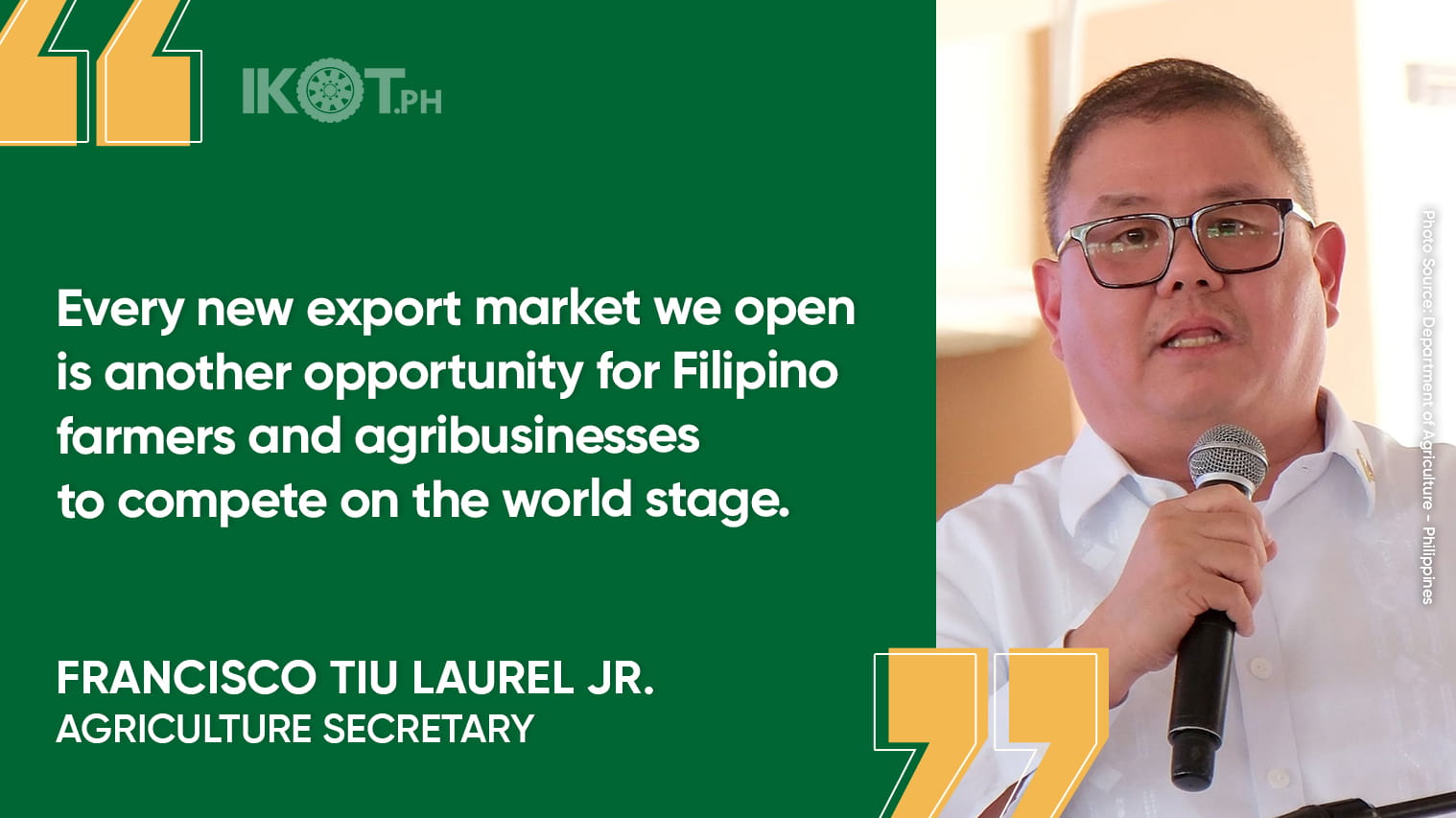
“Every new export market we open is another opportunity for Filipino farmers and agribusinesses to compete on the world stage,” Tiu Laurel said.
“The world is ready to discover more of what the Philippines can offer, and we intend to make that opportunity count.”
“Our goal is not simply to sell more Philippine produce, but to build lasting partnerships, meet the exacting standards of international buyers, and ensure that the benefits of export growth reach the people who grow our food. The world is ready to discover more of what the Philippines can offer, and we intend to make that opportunity count,” the agriculture chief said.
The delegation’s performance also reflects the government’s push to strengthen the competitiveness of Philippine agriculture through improved supply chains, agricultural modernization, and closer alignment with international trade requirements.
Export sector representatives expressed appreciation to President Ferdinand R. Marcos Jr. for placing food security, agricultural modernization, and international trade high on the national agenda.
They also credited Tiu Laurel’s leadership for efforts to ease supply chain bottlenecks, champion export-ready commodities, and help local producers comply with demanding global quality standards.
Still, the real measure of export success extends beyond a strong showing at a trade fair. Converting initial interest into repeat orders, dependable supply arrangements, and sustained market access will be essential if the headline figure is to translate into lasting gains for farmers and exporters.
Young said the results demonstrate the continued appeal of Philippine high-value export crops and the importance of coordinated engagement between government and industry.
“The impressive outcome of our sales projections proves that Philippine high-value export crops remain among the most sought-after produce in international markets.”
“The impressive outcome of our sales projections proves that Philippine high-value export crops remain among the most sought-after produce in international markets,” Young said.
“Through coordinated efforts with our private sector partners and industry associations, we have not only secured long-term commercial agreements but also established a sustainable launchpad for our local farmers and exporters to expand their global footprint,” he added.
The DA said it would build on the momentum through targeted business-to-business matching, direct retail intelligence gathering, and closer alignment with international quality benchmarks. These efforts are intended to help Filipino exporters better understand buyer requirements, identify promising commercial channels, and compete more effectively in overseas markets.
The Philippines’ return to Asia Fruit Logistica thus offers a timely reminder that export growth depends on more than having produce the world wants. It requires the capacity to deliver consistently, meet stringent standards, and build relationships that endure long after the trade-show floor has emptied.
The $17.5-million result is an encouraging start. The bigger prize is turning that momentum into a reliable route from Philippine farms to the world’s markets—and ensuring Filipino producers share in the rewards.