
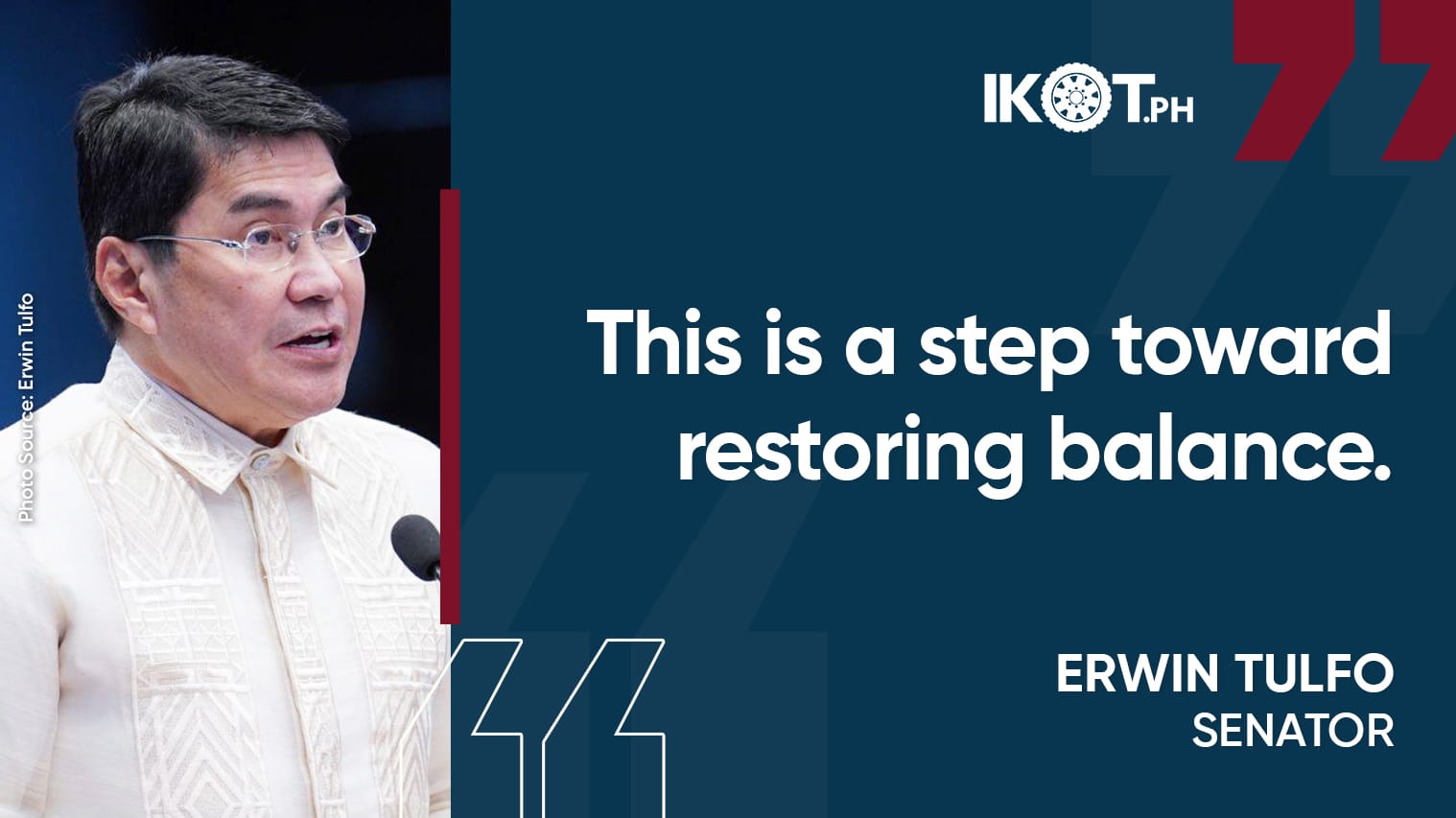
Senator Erwin Tulfo renewed his call to fast-track Senate Bill No. 641, a measure aimed at amending the decades-old Oil Deregulation Law (RA 8479).
Co-authored with Senator Win Gatchalian, the bill seeks to mandate transparency by empowering the Department of Energy (DOE) to compel oil companies to disclose the actual costs of imported fuel.
In a privilege speech, Tulfo clarified: “This measure, Mr. President, does not seek to dismantle deregulation per se, nor to interfere with legitimate business operations.”
“It aims to bolster accountability through enhanced transparency on the pricing scheme of petroleum products in the country.”
“It aims to bolster accountability through enhanced transparency on the pricing scheme of petroleum products in the country,” the legislator added.
The lawmaker highlighted public frustration over price volatility, particularly during global crises like the ongoing Middle East tensions. The senator questioned the disparity between global market shifts and local pump prices.
“We witness consecutive price hikes in gasoline stations, but Filipinos are left in the dark as to how these stations came up with the pricing.”
“We witness consecutive price hikes in gasoline stations but Filipinos are left in the dark as to how these stations came up with the pricing,” he said.
“When global prices drop, why are local rollbacks so minimal? Are these price adjustments truly reflective of global market trends? Or this is an artificial jacked-up prices to gain more income?” he further asked.
As the Senate Foreign Relations Committee Chairman, Tulfo framed Senate Bill 641 as a “concrete step” to deter these seemingly arbitrary oil price increases.
He likewise reassured stakeholders that the bill includes safeguards for sensitive data, noting that “confidential and proprietary information will be protected.”
Closing his plea for legislative support, Tulfo described the bill as a necessary correction for the industry.
“This is a step toward restoring balance—between free enterprise and public accountability, between profit and protection, and between deregulation and responsible governance,” he concluded.