
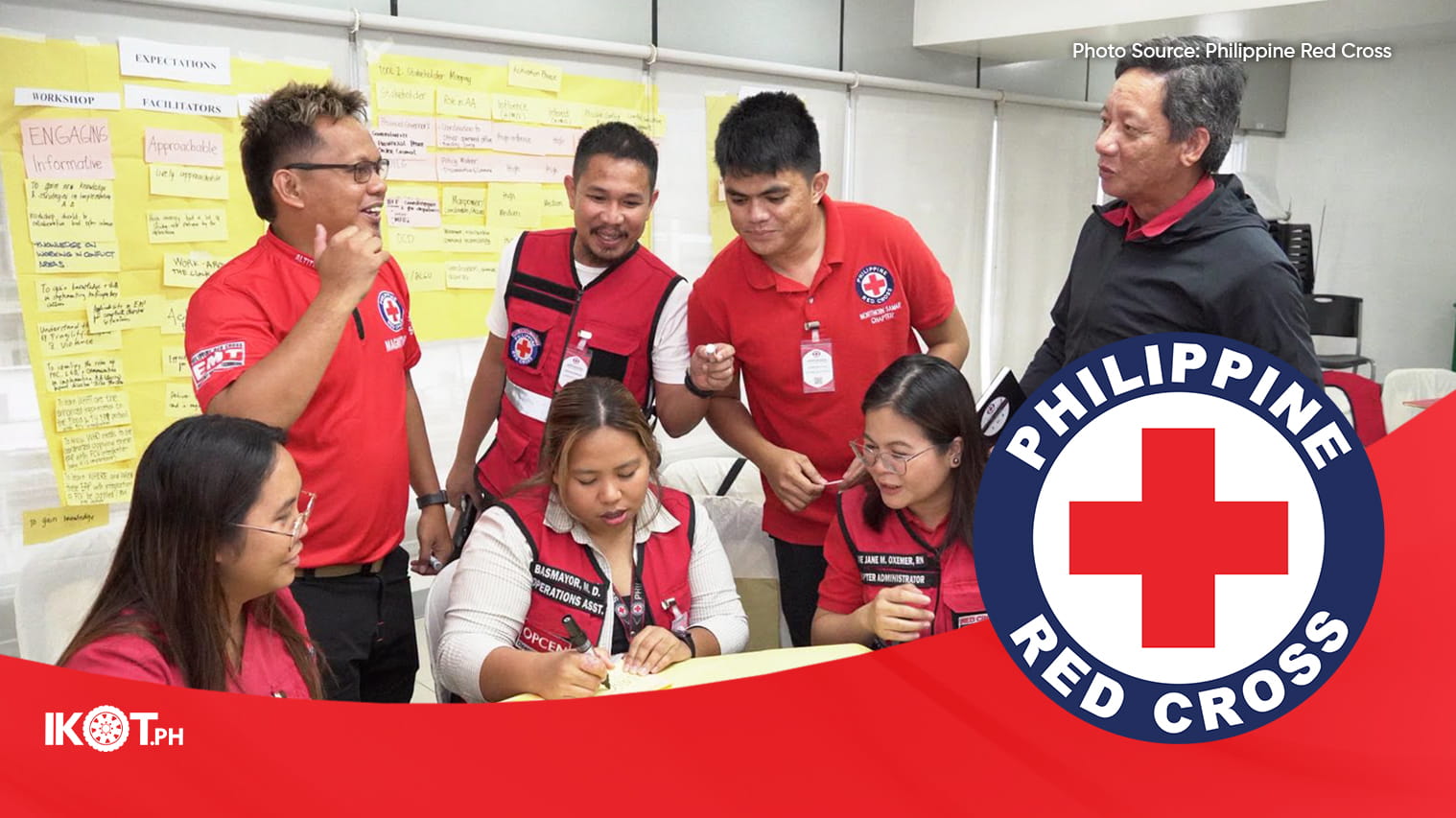
The Philippine Red Cross (PRC) strengthened its Flood and Typhoon Early Action Protocols (EAPs) during a two-day workshop held at its National Headquarters.
The workshop integrated a Fragility, Conflict, and Violence (FCV) lens to make humanitarian response safer and more effective in communities facing both disasters and conflict.
PRC personnel and chapter representatives learned risk analysis, stakeholder mapping, beneficiary selection, and operational procedures for anticipatory action in complex emergencies.
PRC Disaster Management Service technical officers led the sessions with support from the International Committee of the Red Cross (ICRC), the American Red Cross, and the International Federation of Red Cross and Red Crescent Societies (IFRC).
“We must act early while ensuring every humanitarian action is conflict-sensitive, protects lives, and reaches those most in need without creating additional risks.”
“Disasters become even more challenging in communities facing complex situations. We must act early while ensuring every humanitarian action is conflict-sensitive, protects lives, and reaches those most in need without creating additional risks,” said PRC Chairman and CEO Dick Gordon.
The workshop is part of the PRC’s Anticipatory Action in Areas Affected by Conflict Project, which strengthens early action protocols for safer and more inclusive humanitarian operations.
“Anticipatory action is most effective when it reflects the realities of the communities we serve.”
“Anticipatory action is most effective when it reflects the realities of the communities we serve,” PRC Secretary General Dr. Gwendolyn Pang explained.
“Integrating an FCV lens enables us to deliver timely, context-sensitive, and responsive assistance,” Pang concluded.