
There’s a quiet pattern many people don’t notice.
You tell yourself you’ll fix your finances…
when you feel ready.
Pag ganado ako, aayusin ko.
Kapag okay na ang pakiramdam ko, sisimulan ko ulit.
So you wait.
You wait to feel inspired before you save.
You wait to feel clear before you plan.
You wait for the “right mood” before you look at your numbers.
And for a while, that feels reasonable.
When Progress Depends on a Feeling
Then motivation shows up.
You feel focused.
Disciplined.
In control.
You organize your expenses.
You set goals.
You start strong.
But a few days—or weeks—later, something shifts.
Work gets heavier.
Energy drops.
Life becomes more demanding.
And the feeling disappears.
Why Motivation Doesn’t Last

This is where many people get stuck.
Not because they don’t care.
Not because they lack discipline.
But because they’re depending on something
that isn’t designed to stay.
Motivation is emotional.
It rises when things feel light.
It fades when things feel heavy.
It follows your energy—not your plans.
When Waiting Becomes the Pattern

So the cycle repeats.
You start when you feel good.
You stop when you don’t.
And over time, it creates a quiet frustration:
“Bakit hindi ako tuloy-tuloy?”
Not realizing that the problem isn’t consistency.
It’s the condition you’ve attached to it.
What Money Requires Instead
Money doesn’t wait for motivation.
Bills arrive on schedule.
Responsibilities continue.
Life keeps moving—whether you feel ready or not.
So progress cannot depend on emotion alone.
It needs something steadier.
The Shift from Motivation to Rhythm
What actually sustains progress is rhythm.
Not intensity.
Not excitement.
Rhythm.
What Rhythm Looks Like in Real Life

Rhythm is quieter than motivation.
It doesn’t feel dramatic.
It doesn’t give you a rush.
But it keeps going.
It looks like:
Checking your numbers briefly—even when you don’t feel like it.
Saving a small amount—kahit hindi perfect ang buwan.
Making one clear decision—without waiting to feel ready.
Walang hype.
Walang build-up.
Just movement.
Why Rhythm Works Better
When something becomes part of your rhythm,
it stops needing energy to begin.
You don’t ask:
“Gusto ko ba gawin ’to ngayon?”
You ask:
“Ano yung next na ginagawa ko?”
And that small shift changes everything.
For the Tired, Not Just the Disciplined
This matters most for people who are already carrying a lot.
Yung may responsibilities.
Yung may umaasa sa kanila.
Yung pagod na—hindi lang physically, pati mentally.
For them, motivation becomes another burden.
Another thing to generate.
Another standard to meet.
Rhythm, on the other hand, respects reality.
A System That Doesn’t Fight Your Energy
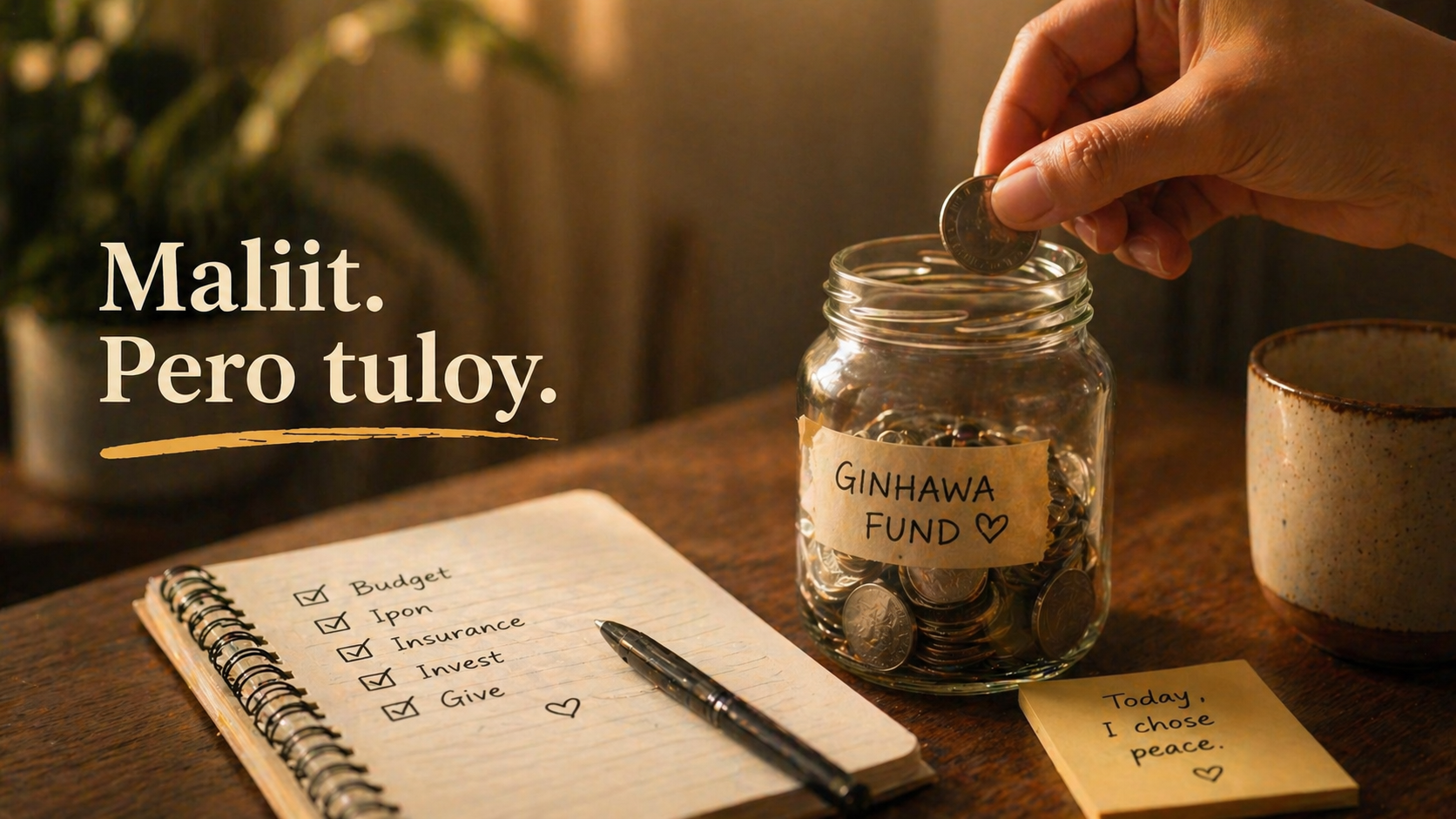
Rhythm allows for low-energy days.
It survives busy weeks.
It continues even when things feel off.
It doesn’t demand that you be at your best
just to function.
It meets you where you are—
and keeps you moving anyway.
The Role of Motivation (But Only at the Start)
This doesn’t mean motivation has no value.
It can help you begin.
It can give you that first push.
That initial clarity.
But it cannot carry you forward.
Because anything built on a feeling
will eventually fall when that feeling fades.
What Real Consistency Feels Like
When your financial habits are built on rhythm,
progress starts to feel different.
Less intense.
Less pressured.
Less dependent on mood.
You stop performing progress.
You start living it.
A Different Question to Ask
Instead of asking:
“Do I feel like doing this today?”
Try asking:
“What’s the next small step
I already know how to take?”
A Quiet Reframe

Consistency is not about staying motivated.
It’s about staying in motion—
even when motivation is gone.
Finally, Something Important
If you’ve ever felt like you “lost momentum”—
it doesn’t mean you failed.
It may simply mean
you were relying on something that was never meant to last.
Closing Reflection
Lasting financial progress doesn’t come from bursts of energy.
It comes from rhythms
that continue even when life feels ordinary.
Even when you’re tired.
Even when nothing feels exciting.
Even when no one is watching.
Because before systems, before strategies, before results—
there is one quiet skill that changes everything:
Learning how to show up
even when you don’t feel like it.
And that’s where the real work begins.
Catch Thanjo’s personal finance column every Tuesday at 7 p.m. on IKOT.PH and across Facebook, X (Twitter), and Instagram.
DISCLAIMER:
The views and opinions of our partners and contributors expressed in this article are exclusively their own and are made in their personal capacities. They do not reflect the views, policies, or official stance of IKOT.PH, its editors, officers, or affiliates. As such, nothing contained herein shall be construed as professional advice or as an official declaration, endorsement, or position of IKOT.PH